Ecommerce Agency Solutions for E-commerce Growth
At some point, e-commerce businesses will realize that they need an ecommerce agency to drive growth. However, the question remains: which agency is truly the right fit for the business?
This article will provide essential information to help businesses make the right decision and maximize the value that an ecommerce agency can bring.
1. What is an Ecommerce Agency?
An ecommerce agency is a B2B service provider that delivers comprehensive solutions for a company’s e-commerce operations. It acts as an “outsourced team of e-commerce experts,” helping businesses optimize their performance on both domestic and international marketplaces.
Most ecommerce agencies today operate under a full-service model, supporting businesses throughout the entire e-commerce operation process. Typical services provided by an ecommerce agency include:
-
Market research; analysis of industries, competitors, and customer behavior.
-
Building and standardizing online stores in compliance with business requirements and each marketplace’s regulations.
-
Designing and creating content, images, videos, and other visual assets to support sales and advertising activities.
-
Account operation and store management, with daily performance monitoring.
-
Implementing on-platform advertising and multi-channel marketing campaigns to expand customer reach and drive sales.
Read more: What is E-Commerce Service? & Reputable E-Commerce Service Partners in Vietnam
2. Benefits of Hiring an Ecommerce Agency
According to the Intelligent Data Platform Report by Metric.vn, Vietnam’s e-commerce market recorded revenues of VND 202.3 trillion in the first six months of 2025, representing a 41.5% increase compared to the same period in 2024. On a global scale, e-commerce revenue for the full year of 2025 is projected to reach USD 6.86 trillion, reflecting an 8.37% growth compared to 2024 (What’s the Big Data, 2025).
The rapid expansion of both domestic and international e-commerce markets has intensified competition among brands. Partnering with an ecommerce agency helps businesses gain a competitive edge through the following benefits:
Revenue Growth
With strengths in strategic consulting, hands-on implementation experience, and advanced optimization tools, ecommerce agencies support businesses in building and scaling their e-commerce operations in a comprehensive and systematic manner.
Ecommerce agencies assist companies in identifying core products, standardizing sales content, and improving marketing effectiveness to enhance conversion rates. Many businesses have recorded significant growth within a short period of time after collaborating with an ecommerce agency.

Time Savings and Cost Optimization
Partnering with an ecommerce agency enables businesses to significantly reduce both costs and time associated with building an in-house team, including account management, design, technical support, and order operations.
In addition, by applying standardized processes from the outset, agencies help businesses minimize operational errors and avoid wasting time on repeated adjustments and optimizations.
Staying Ahead of E-Commerce Platform Trends and Algorithms
Most ecommerce agencies are authorized partners of major e-commerce platforms. As a result, they can quickly stay up to date with new operational trends, promptly adapt to algorithm changes, and leverage platform priority mechanisms to optimize business performance.
This is an area where self-managed businesses-especially newcomers-often struggle to keep pace. Therefore, working with an agency is an optimal solution that helps products maintain strong rankings, increase visibility, and reach the right target customers more effectively.
Expanding Across Multiple Platforms and Countries
With hands-on experience across both domestic and international e-commerce platforms, ecommerce agencies have a deep understanding of the specific requirements of each market and platform.
Based on this expertise, agencies design suitable expansion roadmaps for businesses-from optimizing product portfolios and standardizing storefronts to refining content and establishing operational workflows.
This approach allows businesses to significantly shorten testing periods, reduce risks, and increase success rates when expanding to multiple e-commerce platforms, especially large international marketplaces with strict standards such as Amazon.
Read more:What is Cross-border E-commerce?
3. Services Provided by Ecommerce Agencies
To help businesses optimize online sales performance, ecommerce agencies typically offer a range of services, including:
3.1. Market Research
Market research serves as the foundation for building a practical and effective e-commerce strategy. Ecommerce agencies analyze industry trends, evaluate competitors, and study customer purchasing behavior to identify opportunities and risks. They also forecast costs, profit margins, and revenue potential, providing businesses with a clear and data-driven perspective before making investment decisions.

From this comprehensive analysis, ecommerce agencies help businesses set clear and achievable goals, while developing detailed, phase-by-phase sales plans to ensure e-commerce operations grow in the right direction.
3.2. Standardized Storefront Setup
Building a standardized storefront enables businesses to establish a professional and consistent brand image across e-commerce platforms.
An ecommerce agency is responsible for optimizing the entire storefront interface, layout structure, and product information system to ensure the store is visually appealing while fully compliant with platform regulations.
At the same time, the agency implements an on-platform SEO keyword strategy aligned with the industry and user search behavior, improving product visibility in search results. This optimization not only boosts rankings but also enhances conversion rates and delivers sustainable business performance.
3.3. Design and Content Creation
Design and content creation play a decisive role in a product’s visibility and competitiveness on e-commerce platforms.
Ecommerce agencies help businesses optimize product pages through high-quality images, compelling descriptions, comparison charts, and well-structured visual highlights, enabling customers to grasp information more quickly and make more informed purchasing decisions.
Beyond conveying information, these content elements help businesses craft a unique story for each product and for the seller itself. As a result, products can stand out more clearly from competitors, contributing to higher conversion rates.
3.4. Account Operations and Store Management
Account operations and store management are among the most complex aspects of e-commerce, as they cover the entire process-from inventory management and order fulfillment to logistics control and reducing return and cancellation rates.
Ecommerce agencies analyze sales performance data and customer behavior, including traffic, conversion rates, and revenue by product. Based on these insights, they optimize each component of the overall operational process.
With a data-driven operating system provided by ecommerce agencies, businesses not only save time and resources but also maintain sustainable growth and make more accurate decisions thanks to timely and reliable insights.

3.5. On-Platform and Multi-Channel Advertising
Advertising is a vital tool for increasing storefront visibility and driving sales, especially for new sellers.
Ecommerce agencies support the full implementation of on-platform advertising formats such as - sponsored products , sponsored brands , and sponsored display -tailored to a business’s budget and growth objectives.
In addition, some agencies offer multi-channel advertising services across platforms like Facebook, TikTok, and other paid media channels to drive diversified traffic to the storefront. This approach helps businesses expand brand reach, improve communication effectiveness, and maximize revenue generated from their advertising budgets.
4. When Do Businesses Need an Ecommerce Agency?
If a business encounters one or more of the situations below, it may be time to consider seeking support from an ecommerce agency.
4.1. Lack of In-House Expertise
Implementing e-commerce requires a team with expertise across multiple functions, including market research, advertising, design, and store operations. Due to the need for diverse and specialized resources, building a fully capable in-house e-commerce team is a major challenge for most businesses.
When specialized talent is lacking, companies often rely on trial and error, which consumes significant time while delivering suboptimal results. Ecommerce agencies address this gap by providing experienced expert teams with deep knowledge of multiple platforms and end-to-end e-commerce operations.
4.2. Declining Sales Performance
As professional e-commerce solution providers, ecommerce agencies bring an objective perspective to audit sales channels, accurately identify the root causes of declining revenue, and propose effective corrective solutions.
In addition to optimizing operations and the customer shopping experience, agencies support businesses in launching new marketing campaigns to expand customer segments and restore growth.
Read more: What Is E-commerce Marketing? How Can You Succeed?
4.3. Limited Time Resources
Managing the entire e-commerce process in-house can easily stretch resources thin and reduce focus on core priorities such as product development, operational management, and strategic decision-making.
Outsourcing to an ecommerce agency allows businesses to transfer part or all operational tasks to a specialized partner. This enables companies to focus on critical objectives while ensuring their online stores continue to operate efficiently.
4.4. Expanding into New Markets
Businesses should strongly consider working with an ecommerce agency when entering new markets-especially export-oriented companies.
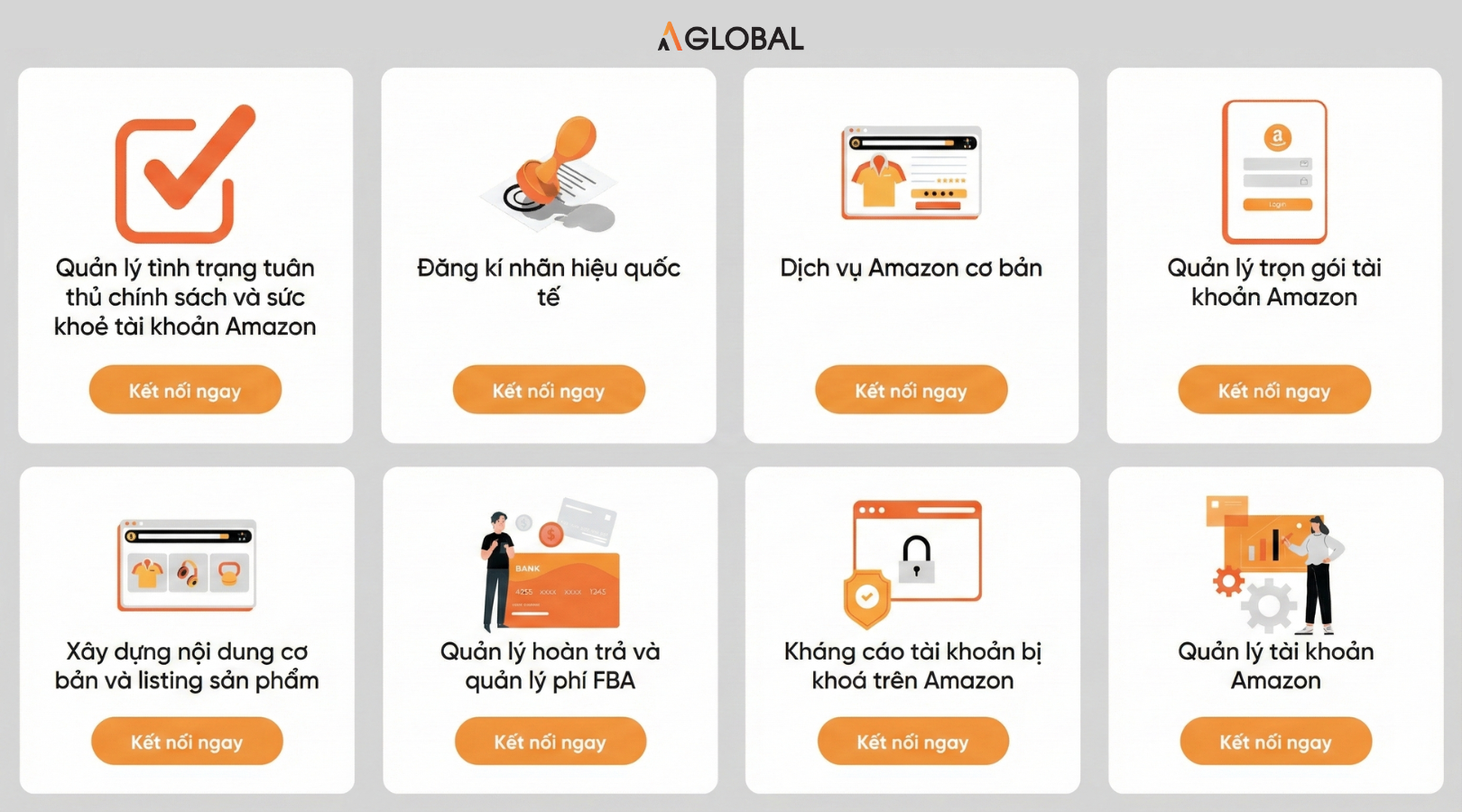
Expanding into a new market means having to adapt to differences in consumer culture, purchasing behavior, legal regulations, operating mechanisms, and logistics systems across each e-commerce platform.
Without sufficient data or hands-on experience, businesses may misjudge market demand, choose the wrong sales channels, or position their products inappropriately. As a result, budgets are used inefficiently and opportunities to gain market share are significantly reduced.
5. Conclusion
With a comprehensive suite of solutions, ecommerce agencies play a vital role in helping businesses optimize performance on e-commerce platforms, enabling sustainable growth and resilience in an increasingly dynamic market.
AGlobal – the leading cross-border e-commerce solution for businesses.
Register now for a free 1-on-1 consultation, tailored to your industry, here!