What is a Marketplace? Everything You Need to Know About E-commerce Platforms
Marketplaces are increasingly becoming a vital sales channel in e-commerce. Think of a marketplace as an "online bazaar" where multiple sellers reach customers on a shared platform. So, what is a marketplace, how does it work, and what do businesses gain by participating?
1. What is a Marketplace?
Connecting millions of buyers and sellers on a single platform, how does a marketplace operate, and is it the optimal choice for businesses?
1.1. Marketplace Definition
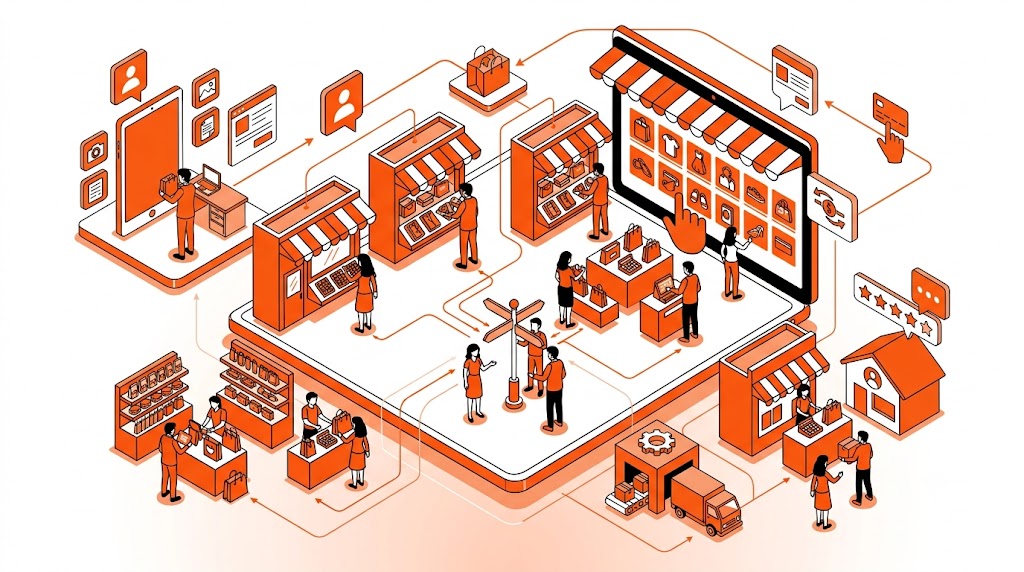
A marketplace is an online platform that acts as an intermediary connecting multiple sellers and buyers within the same system. Instead of building a website from scratch and searching for customers independently, businesses can "rent a storefront" on a marketplace to reach buyers.
Some popular marketplaces today include Shopee, Amazon, eBay, and Facebook Marketplace.
Read more: 4 Ways to Use Amazon Marketplace to Drive Business Growth
What is a Marketplace?
1.2. Key Differences Between an E-commerce Website and a Marketplace
Both e-commerce websites and marketplaces are online selling platforms, but from an operational standpoint, they differ fundamentally regarding target customer bases, brand loyalty, and cost structures.
Comparison Table: E-commerce Website vs. Marketplace
| Criteria | Marketplace | E-commerce Website |
| Business Model | Multi-seller, multi-buyer | Single seller, multi-buyer |
| Customer Base | Built-in platform traffic | Acquired independently via marketing/SEO |
| Infrastructure | Provided by the platform | Built and managed by the business |
| Competition | Fierce price competition directly beside listed products | No direct competitors on the same site |
| Brand Control | Platform retains customer data; limited direct communication; strict adherence to platform rules | Full control over operations and complete customer data ownership (phone, email, behavior) |
2. How Does a Marketplace Work?
Depending on business objectives, each e-commerce platform operates differently. However, the core role of a marketplace remains providing a convenient and secure trading environment for all participating parties.
2.1. Operational Process
A marketplace operates on a three-party intermediary model: Platform, Seller, and Buyer. The platform rarely owns the majority of the inventory; instead, it provides technical infrastructure, transaction processing, and shipping logistics to connect buyers and sellers.
Read more: Selling on E-commerce Platforms: An 8-Step Process
2.2. Revenue Sources for Marketplaces
Marketplace revenue primarily stems from seller services and on-platform transaction fees.
Common revenue streams include:
- Commission fees: Charged as a percentage of order or transaction value according to platform rules.
- Service fees: Applied to specific seller support services.
- Advertising: Paid by sellers to boost product visibility.
- Value-added services: Such as fulfillment, warehousing, or specialized seller solutions.
3. Key Differences Between Marketplace Models
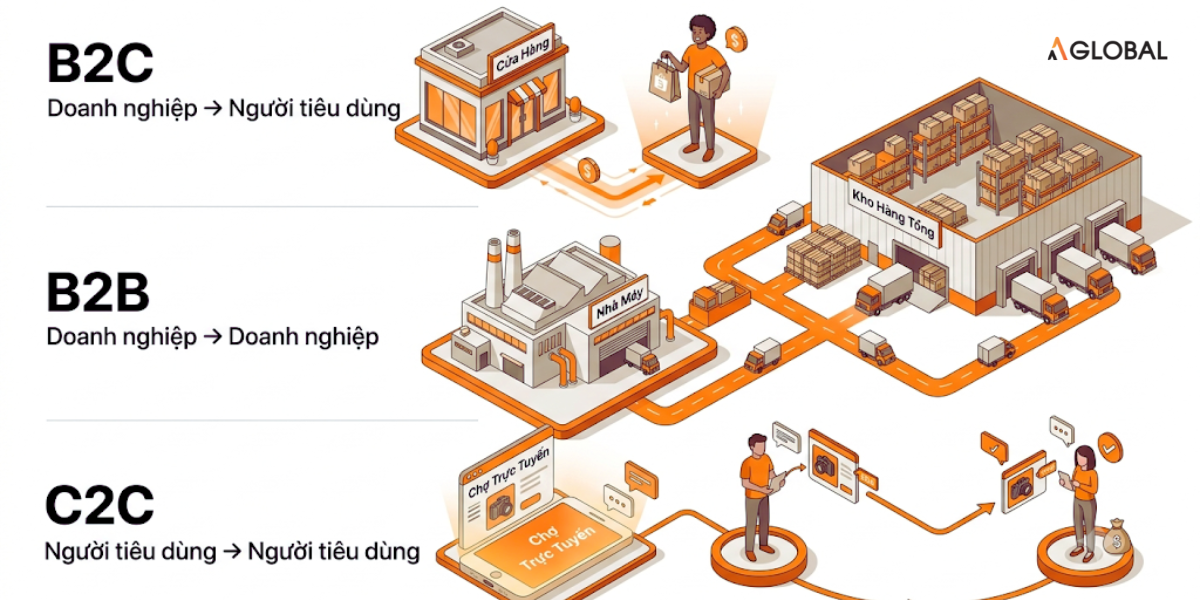
Marketplaces do not all serve the same transaction types. Based on participants and transaction methods, marketplaces are typically categorized into three main models: B2C, B2B, and C2C. Each model features distinct operations and target users tailored to specific business needs.
3 types of Marketplace
3.1. B2C Marketplace
B2C (Business-to-Consumer) connects businesses directly with individual consumers. This is the most familiar marketplace type for online shoppers, where brands and retailers list products directly for end users.
Examples: Amazon, Shopee, Lazada.
Read more: Amazon Vietnam: 5 Key Considerations for Beginners
3.2. B2B Marketplace
Unlike B2C, purchasing decisions in B2B involve higher order values, complex transaction terms, and ongoing business relationships. Connecting business to business, B2B platforms serve bulk purchasing, sourcing, and partner discovery needs.
Representative B2B Marketplace: Alibaba
3.3. C2C Marketplace
C2C (Consumer-to-Consumer) facilitates commerce directly between individual users. Anyone can list personal items or assets and complete transactions directly with other consumers on the platform.
Real-world C2C Examples: Cho Tot, Facebook Marketplace (where individual sellers list items or local producers sell to nearby buyers).
4. Pros and Cons of Selling on a Marketplace
Evaluating platform benefits and limitations helps business owners formulate suitable strategies and optimize resources effectively.
4.1. Core Advantages
- Large existing traffic: Instant access to active buyers without initial customer acquisition costs.
- Turnkey infrastructure: Pre-built systems for product listing, payments, shipping, and order management.
- Low-risk testing: Ideal for testing product demand, market viability, and competition at minimal cost.
- Sales channel diversification: Serves as an effective additional touchpoint alongside direct websites and existing channels.
4.2. Disadvantages
- Intense competition: High exposure to price wars, review comparisons, and ad placement bidding due to many similar sellers.
- Profit margin erosion: Continuous platform commissions, service fees, and ad spends reduce overall profitability.
- Platform dependence: Business operations are directly impacted whenever the platform updates policies, fees, or algorithms.
- Limited control: Standardized storefront layouts and strict rules restrict brand differentiation and custom customer experiences.
5. Key Considerations for Businesses Before Joining
Key factors to consider on a marketplace
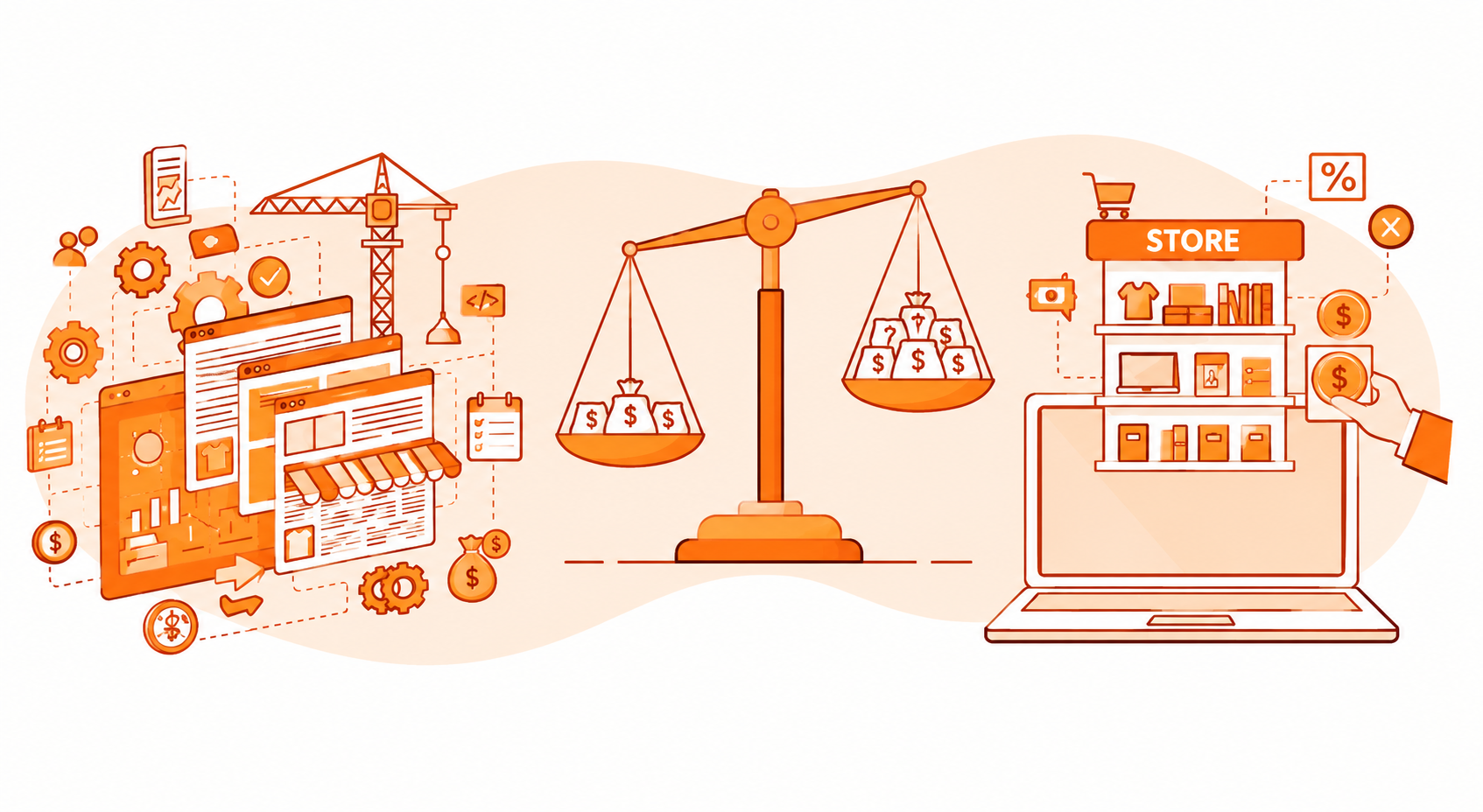
Marketplaces offer immense reach, but joining a large platform does not guarantee sales efficiency. Businesses must evaluate target audiences, product fit, cost structures, and operational capacity before committing.
5.1. Target Audience and Product Alignment
Not every product suits every marketplace. Businesses must confirm whether their target buyers actively shop on the platform and analyze category competition.
Key questions to consider:
-
Where does the target audience regularly shop?
-
Does the product match typical marketplace buying behaviors?
-
What prices and value propositions do direct competitors offer?
-
Are internal resources sufficient to manage listings and fulfill orders efficiently?
Selecting the right platform initially helps focus resources on the right audience and sales channels.
Read more: Selling on Amazon in Vietnam with AGlobal
5.2. Costs, Operations, and Platform Reliance
Marketplace selling involves more than inventory and shipping expenses. Recurring commissions, service charges, and ad fees directly affect profit margins.
Platform policies evolve constantly, requiring sellers to remain agile and adaptable to prevent business disruptions.
6. Conclusion
Understanding how marketplaces function highlights their value as powerful sales channels that leverage built-in traffic and infrastructure to scale business revenues. However, brands must evaluate resources, product suitability, and total fee structures to utilize these platforms effectively.
AGlobal - The optimal cross-border e-commerce solution for businesses.
Register for a free 1-on-1 consultation tailored to your industry Here!