Comparing the Most Popular E-commerce Marketplaces
To export successfully, businesses must choose the right e-commerce marketplaces aligned with their resources and operational models. From Amazon, eBay, and Walmart to Alibaba and Etsy, every platform operates under its own rules. So, where should Vietnamese enterprises begin, and what preparations are required? This article provides an in-depth analysis.
1. Overview of the World's Largest E-commerce Marketplaces
An e-commerce marketplace is an online technology platform that serves as a commercial intermediary connecting buyers and sellers. Concurrently, it offers integrated solutions for payments, logistics, dispute resolution, and transaction security for all participating parties.
Popular e-commerce platforms are generally categorized into B2C, B2B, and niche marketplaces tailored to specific product categories or business models.
For Vietnamese sellers, policies and onboarding requirements vary across platforms. Notable international platforms suitable for global expansion include Amazon, eBay, Walmart Marketplace, Alibaba.com, Temu, and Etsy.
2. Reputable E-commerce Marketplaces for Sellers
In business, no single platform fits all enterprise types. Therefore, analyzing the distinct features of each marketplace before joining is crucial.
2.1. Amazon: The Global Giant with the FBA Logistics Network
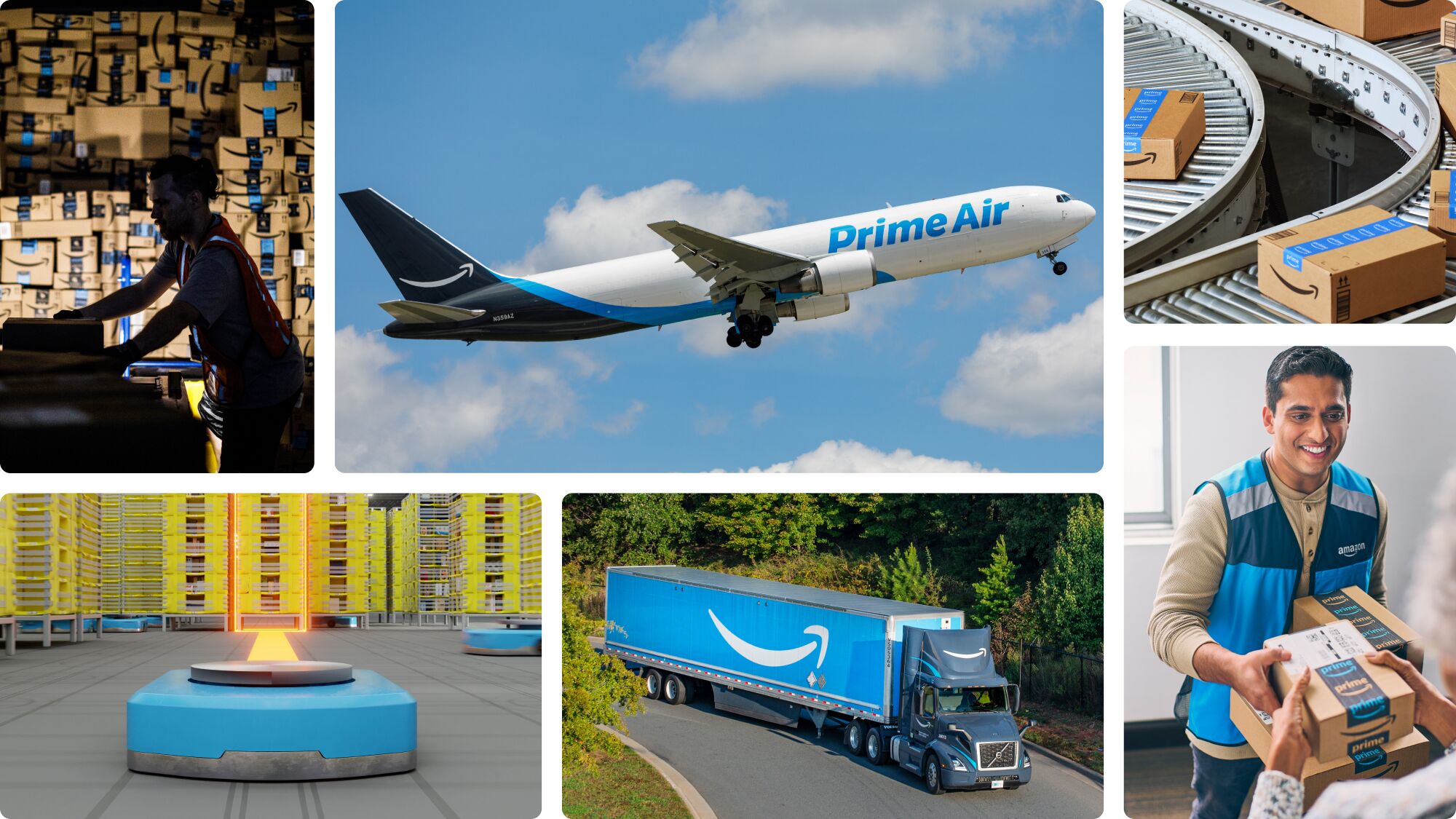
Amazon supports over 600,000 sellers globally, shipping over 5 billion items annually
Amazon is one of the world's largest marketplaces, renowned for its scale and capability to help businesses reach international consumers. According to ECDB, Amazon generated approximately $847.35 billion in e-commerce revenue in 2025.
With its strengths in global fulfillment networks, domestic transportation, and extensive warehousing, Amazon is a top priority for companies driving export growth.
Ideal for businesses that:
-
Possess direct manufacturing capabilities: Control supply and optimize unit costs (key sectors: processed agricultural goods, handicrafts, furniture, textiles).
-
Offer international standard products: Hold reputable certifications (FDA, ISO...) and clear value propositions (eco-friendly, authentic/local origin, private label).
-
Have financial backing & a long-term mindset: Willing to invest in cross-border fulfillment (FBA) to build a sustainable global brand.
Read more: Amazon Selling Guide
2.2. eBay: A Long-Standing Marketplace Best for Handmade and Unique Items
Known for its auction and fixed-price listing models, eBay generated $22.4 billion in Gross Merchandise Volume (GMV) in Q2 2026. Without requiring overseas inventory storage, eBay directly connects sellers with over 130 million active global buyers.
However, eBay limits listing quantities for new accounts and requires strict Payoneer verification. Consequently, this platform is best suited for:
-
Individuals & Small Sellers (POD/Dropship): Beginners in exporting with low capital, offering print-on-demand designs or small-scale handmade goods.
-
Small and Medium Enterprises (SMEs): Looking to test international markets with low upfront costs or sell within specialized niche categories.
Read more: Comparing eBay and Amazon
2.3. Walmart Marketplace: Promising Ground for Strong Supply Chains
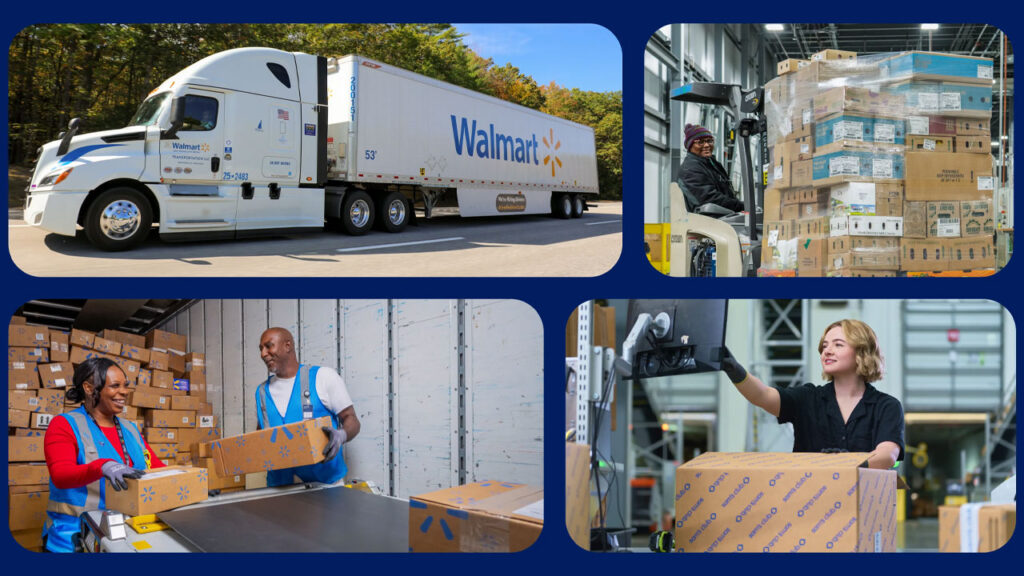
Walmart seamlessly connects physical and digital customer journeys across stores, e-commerce, and online marketplaces
As the world's largest retailer, Walmart is Amazon's primary and most rigorous competitor in the US market. Leveraging an established physical infrastructure of thousands of stores across the US, Walmart seamlessly bridges e-commerce and offline retail, opening significant export opportunities for highly standardized businesses.
However, Walmart applies extremely strict seller criteria, mandating a registered business entity. Furthermore, shoppers on the platform are highly price-sensitive, requiring sellers to optimize production costs effectively.
Walmart is best suited for:
-
Established Vietnamese enterprises: Businesses with proven export experience, large production capacity, and full international certifications (FDA, ISO, BSCI...).
-
Successful marketplace sellers: Sellers seeking to diversify distribution channels to mitigate single-platform dependency risks.
Read more: Selling Opportunities on Walmart
2.4. Alibaba: The #1 B2B Platform for Formal Wholesale Exports
While consumer platforms like Amazon, eBay, and Walmart focus on retail, Alibaba leads global cross-border B2B trade. It serves as a launchpad for Vietnamese manufacturers and exporters to connect directly with international importers, wholesalers, and global supply chains.
Handling over 50 million buyers and 500,000 Requests for Quotation (RFQs) daily, it is an ideal direct channel for:
-
Manufacturers, OEM Factories & Exporters: Companies with high supply capacity, independent production lines, and dedicated international sales teams for negotiations and quoting.
-
Enterprises Seeking B2B Buyers: Businesses aiming for formal B2B export contracts and long-term wholesale partnerships rather than small-scale retail orders.
Read more: Alibaba E-commerce Handbook
2.5. Etsy: A Goldmine for Handicrafts and Custom Gifts
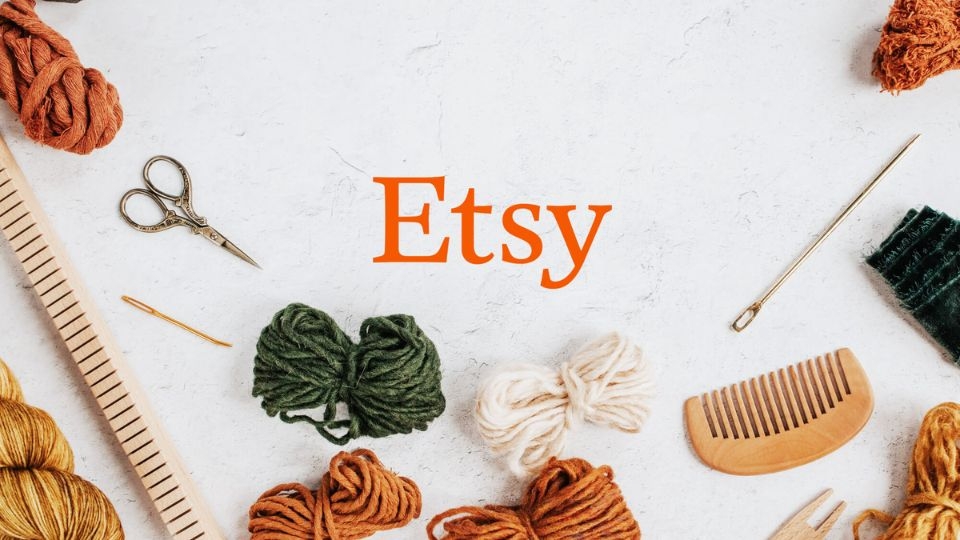
A global online marketplace where people come together to make, sell, buy, and collect unique items
Among major global marketplaces, Etsy is uniquely specialized entirely in handmade goods, vintage items, and Print-on-Demand (POD). Tens of millions of buyers actively search the platform for personalized and one-of-a-kind items.
Etsy is highly favored by:
-
Artisans & Craft Workshops: Sellers offering apparel, ceramics, bamboo/rattan products, jewelry, and home decor with distinct local or bespoke appeal.
-
Designers & POD Sellers: Creators selling digital files, design templates, digital wedding invites, or custom-printed t-shirts and mugs.
Read more: What is Etsy? How to Sell on Etsy
3. Real-World Success Lessons from Vietnamese Enterprises on Global Marketplaces
Case studies show that to succeed globally via e-commerce marketplaces, Vietnamese businesses must refine their products and continuously adapt operational workflows to match international markets.
3.1. NEWBAM Bringing Vietnamese Cashews to the World via Amazon
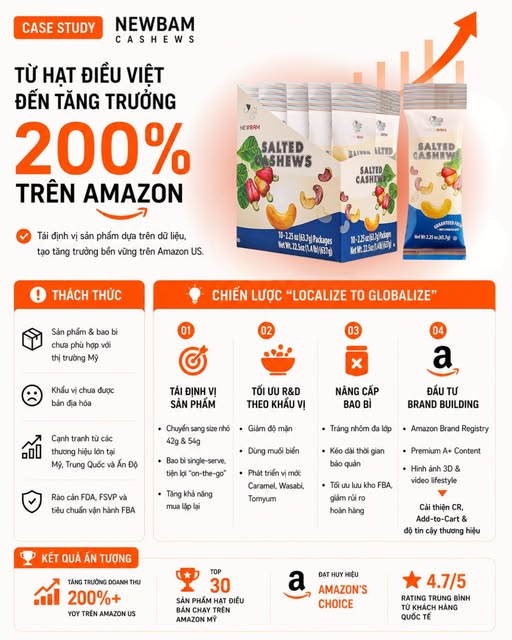
NEWBAM - Bringing Vietnamese Cashews to the World
NEWBAM conquered the US market by transforming traditional cashew nuts into "healthy snack on-the-go" single-serve packaging. Driven by continuous customer feedback on Amazon, the brand developed unique flavors such as caramel, wasabi, and tomyum to cater to local preferences.
Additionally, leveraging Fulfillment by Amazon (FBA) fully solved their cross-border logistics challenges, freeing up resources to focus on R&D and manufacturing. Consequently, the brand earned a 4.7-star rating, entered the Top 100 Best Sellers list, and secured the Amazon’s Choice badge within 6 months.
3.2. D&T Khánh Hòa Sea Grapes: Exporting Green Superfoods Globally

DT Group - Clean Superfood Conquering the International Market
D&T Khánh Hòa Sea Grapes serves as a landmark example of leveraging B2B e-commerce platforms-specifically Alibaba-for formal export growth.
By proving international manufacturing standards and leveraging RFQ opportunities, DT Group successfully connected with major importers in the US, Japan, and South Korea. This B2B channel enabled DT Group to optimize factory capacity through bulk orders while ensuring payment security via Trade Assurance.
4. Key Preparations for Vietnamese Businesses Before Selling Internationally
When evaluating global e-commerce platforms, companies must project initial capital, legal documentation, and product compliance requirements. Each marketplace maintains unique regulations; thus, a one-size-fits-all setup should be avoided.
4.1. How Much Capital is Required to Start?
-
Platform Fees: Account subscription fees, listing fees, or transaction commission fees based on the platform.
-
Cost of Goods Sold (COGS): Product manufacturing cost, packaging, and initial inventory preparation.
-
Operational Expenses: Freight shipping, warehousing, order fulfillment, and return handling.
-
Marketing & Selling Costs: Advertising campaigns, promotions, and international payment processing fees.
There is no fixed capital threshold; budgets should be calculated based on the chosen marketplace, product category, and target country.
4.2. Required Legal Documents and Procedures
Seller registration requirements vary by platform. Some allow individual registration, whereas others mandate a verified corporate entity.
When exporting goods through major marketplaces, businesses should prepare:
-
Customs declarations.
-
Commercial Invoice.
-
Packing List.
-
Bills of Lading / Air Waybills depending on shipping methods.
-
Certificate of Origin (C/O) if required.
-
Specialized permits and regulatory certifications for restricted items.
Businesses should thoroughly verify platform requirements, export regulations, and import compliance rules in destination markets.
4.3. Essential Product Standards
To achieve export success across global marketplaces, products must satisfy 5 fundamental criteria:
-
Legal & Required Certifications: Target market approvals (FDA, CE, ISO, HACCP...) and Certificates of Origin (C/O).
-
Packaging & Labeling Compliance.
-
Logistics Optimization: Dimension and weight optimization to minimize shipping costs.
-
Consistent Quality Control: Ensuring uniform batch quality to prevent negative reviews and returns.
-
Market Localization: Tailoring design and specifications to match local consumer habits.
5. Conclusion
No single e-commerce marketplace fits every business profile. Export performance relies entirely on the strategic alignment between product characteristics, available budget, and operational capabilities across global marketplaces.
Selecting the right platform from the outset is the most effective way for enterprises to optimize costs and manage risk. To build a data-driven international expansion roadmap, contact AGlobal for tailored strategic consultation.
AGlobal - The optimal cross-border e-commerce solution for businesses.
Register for a free 1-on-1 strategy session tailored to your industry Here!