What is TEMU? Opportunity or Challenge for Vietnamese Businesses?
What is Temu? This is a question many businesses are interested in as this e-commerce platform rapidly expands in the international market. Besides creating price competition, Temu also poses many challenges regarding digital transformation, product quality, and development strategy. This article will help you gain a more comprehensive understanding of this platform.
1. What is Temu? Origin and operating model
Temu is a cross-border e-commerce platform founded in Boston, USA, in 2022. The platform connects consumers with a network of sellers, manufacturers, and brands across various industries.
Temu offers a diverse range of products, from fashion, home goods and accessories to electronics, toys, and everyday consumer products. Low prices and numerous promotions are key factors that have helped the platform quickly attract buyers.
Temu does not directly manufacture most of its goods. The platform acts as a connector, helping sellers reach customers and coordinating with logistics partners to handle delivery.
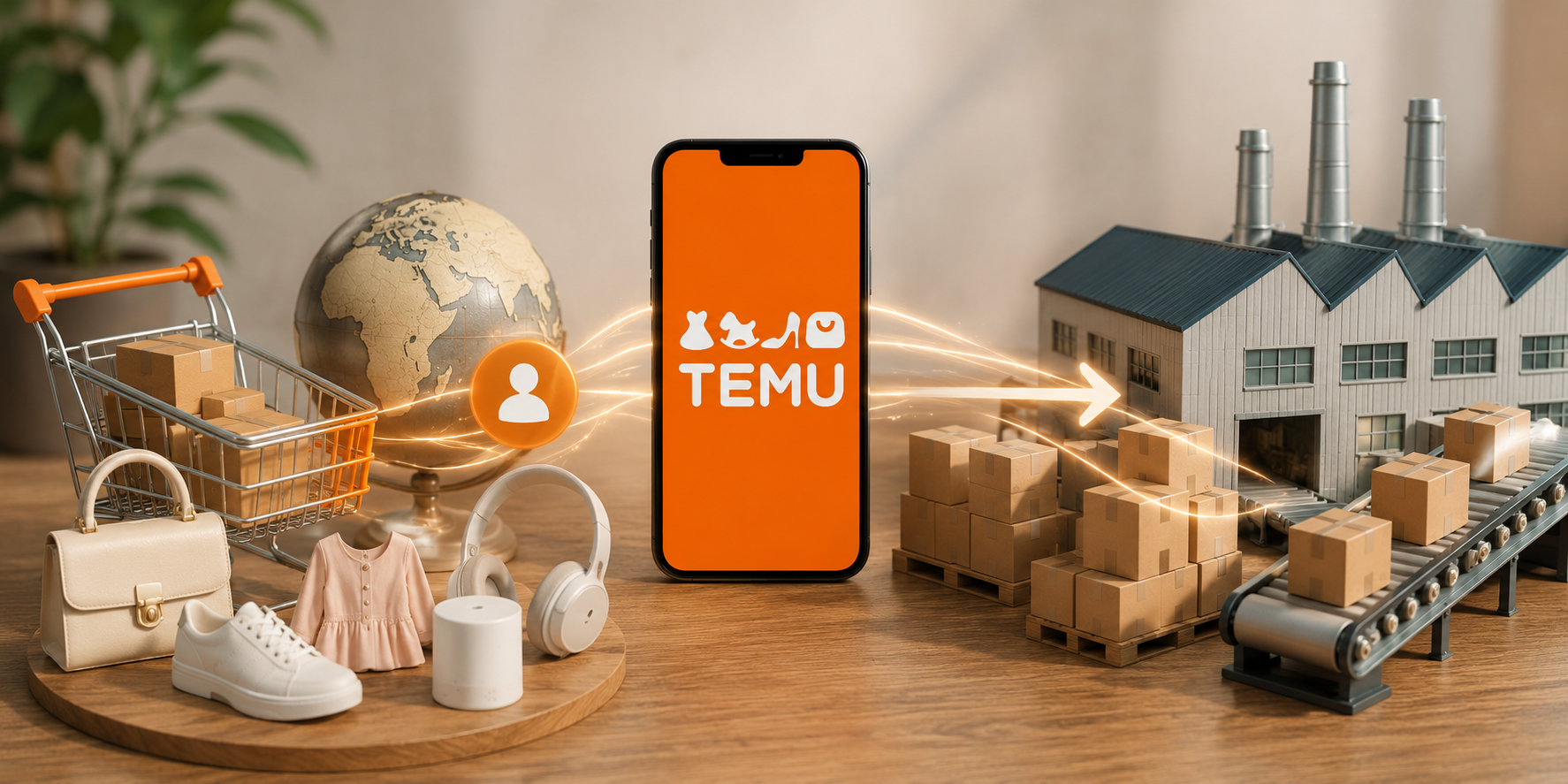
One point worth noting is the model.C2M – Consumer to ManufacturerTemu leverages data on user demand to help providers make adjustments.Products, output, and sales prices increase faster.
This model shortens the gap between the market and production. However, it does not completely eliminate intermediaries, as the transaction process still requires the participation of sellers, platforms, and logistics partners.
In Vietnam, Temu's operations have been suspended since December 2024 while the platform completes the registration process for its e-commerce services. According to PDD Holdings' report, operations in Vietnam had not resumed at the time the report was published.
Therefore, businesses should view Temu as a prime example of the cross-border e-commerce trend. This is not yet a stable and established business channel in the Vietnamese market.

2. Why has Temu experienced such rapid growth in the global market?
To understand Temu, it's essential to consider the factors that have contributed to its rapid growth in a short period. Instead of competing directly with traditional e-commerce models, Temu chose a strategy focused on pricing, supplier scale, and the shopping experience.
2.1. Exploiting the C2M model
C2M helps connect consumer demand with production. Data on search volume, purchasing behavior, and market feedback can help suppliers identify products that are in demand.
This allows manufacturers to adjust product designs, quantities, and market timing. This process helps to limit overproduction and reduce inventory costs.
For suppliers, the C2M model also opens up opportunities to reach more customers without having to build their own distribution systems in each country.
2.2. Low prices and a wide product range.
One of Temu's standout advantages is its competitive pricing strategy. The platform often combines low prices with discount codes, shipping offers, and promotional programs to encourage purchases.
Temu's wide product catalog also helps it reach a diverse range of users. Customers can find fashion items, household goods, accessories, and consumer products all on one platform.
However, low prices don't always reflect the full cost. Buyers still need to consider quality, delivery time, return policies, and the seller's reliability.
2.3. Applications of data and algorithms
Temu invests in technology that analyzes user behavior and product recommendation systems. The content displayed is personalized based on each customer's needs, search history, and interactions.
The application of data helps platforms increase user retention. At the same time, sellers gain more information to adjust their product catalog and pricing strategies.
This is a general trend in modern e-commerce. Businesses are increasingly relying on data rather than just operating based on experience.
2.4. Logistics and Shopping Experience
Temu collaborates with logistics companies to transport goods from various sources. The origin of an order may vary depending on the product and seller.
Order tracking, after-sales support, and return/exchange processing contribute to an enhanced shopping experience. In the e-commerce environment, these are no longer supplementary factors but have become an integral part of a competitive advantage.
3. The context of Temu's entry and the landscape of the Vietnamese e-commerce market.
Temu's growth reflects the rapid expansion of cross-border e-commerce. Consumers can access goods from multiple markets with just a few taps on their phones.
A prominent trend in this area is the development of the C2M (Consumer-to-Merchant) model. This model allows manufacturers to respond more quickly to market demand, shorten the time to get products to buyers, and create a cost advantage.
Temu leverages this model to offer a wide range of goods at competitive prices. This allows goods from Chinese suppliers to reach consumers in more markets more easily.
The competitive landscape has therefore changed significantly. Vietnamese businesses no longer compete solely with domestic sellers but also face large-scale manufacturers with lower costs and faster market turnaround times.
The pressure is most evident in mass-market, less differentiated, and easily substitutable product categories. When buyers can compare prices across multiple platforms, businesses that rely solely on low prices will find it difficult to maintain a long-term competitive advantage.
However, price is not the only factor determining purchasing behavior. Quality, origin, delivery time, return policy, and brand reputation still greatly influence customer decisions.
This situation both opens up opportunities to access international markets and creates pressure for innovation among Vietnamese businesses. Businesses operating using traditional methods will face greater difficulties in maintaining profit margins.
Conversely, businesses with differentiated products, flexible supply chains, and strong brand-building capabilities will have more room for growth. Temu's rise, therefore, is not just a story of a platform.
This also indicates that e-commerce is reshaping production, distribution, and consumption globally.
4. How should Vietnamese businesses adapt to the development of Temu?
After researchingWhat is Temu?More importantly, it's crucial to determine how businesses need to prepare. The changes that Temu represents will continue to impact the market, even before the platform is back online in Vietnam.
4.1. Improving product quality
Businesses should not pursue the lowest price race at all costs. Sustainable competitive advantage must be built on consistent quality, transparent sourcing, and the ability to meet actual needs.
The production process needs to be standardized from raw materials to final inspection. Businesses should also clearly disclose standards, specifications, and usage instructions to build customer trust.
For easily replaceable product groups, businesses need to add value through design, functionality, packaging, or accompanying services.
4.2. Building a Distinctive Brand
A strong brand helps businesses avoid direct price competition. Customers tend to pay higher prices when they trust the quality and service.
Businesses need to identify the core differentiating factor of their product. This could be the materials, technology, design, local origin, or personalization capabilities.
Images, messages, and experiences across sales channels also need to be consistent. This helps improve brand recognition and customer retention.
4.3. Developing a multi-channel sales system
Businesses should not rely entirely on a single e-commerce platform. Combining a website, social media, physical stores, and local platforms will help reduce risks when policies change.
The channels need to be interconnected to synchronize product, inventory, and order information. This allows customers to seamlessly switch between touchpoints without interruption.
A dedicated website also helps businesses better access customer data. This is a crucial foundation for building customer care programs and increasing repeat purchases.
4.4. Supply Chain Optimization
Temu demonstrates that speed and operating costs can become major competitive advantages. Vietnamese businesses need to review their raw material procurement processes, inventory management, and order processing.
Accurate demand forecasting will help limit excess inventory. Businesses should also develop multiple supply chain options to reduce dependence on a single supplier.
For export operations, it is necessary to clarify logistics costs, delivery terms, and the responsibilities of each party. These are factors that directly affect the price and customer experience.
4.5. Promoting digital transformation
Digital transformation should be viewed as a long-term strategy, not just about launching a product online. Businesses need to apply technology to their entire operational process.
Inventory and order management software helps reduce errors. CRM supports customer tracking, while data analytics tools help evaluate products, sales channels, and advertising effectiveness.
Businesses can also apply automation to customer service and operational reporting. These solutions save time and improve responsiveness to market changes.
5. Conclusion
What is Temu? It's a cross-border e-commerce platform that's revolutionizing the global retail landscape. Although not yet officially licensed to operate in Vietnam, Temu remains a valuable example of the competitive landscape in the e-commerce era.
For Vietnamese businesses, improving product quality, building brands, and accelerating digital transformation will be crucial foundations for adapting to the market and enhancing competitiveness in the future.
Register for a free one-on-one consultation tailored to your business's specific industry sector today!Here!