What Is Shopify? A Complete Guide to the eCommerce Solution for Businesses
What is Shopify, and why do so many businesses choose this platform? Discover Shopify's key features, pricing plans, and the benefits it offers. Is Shopify mainly used by international businesses or can domestic businesses also benefit from it?
1. What is Shopify and how does it work?
Shopify is a software-as-a-service (SaaS) ecommerce platform that enables individuals and businesses to build and manage online stores from a single system. The platform includes built-in hosting, security, payment processing, and store management tools, allowing users to launch an online store without investing in their own technical infrastructure.
Getting started with Shopify is straightforward. Users simply create an account, choose a store theme, add products, configure payment methods, and publish their online store. With its flexible scalability and extensive ecosystem of features, Shopify is suitable for a wide range of business models, from individual sellers and startups to large enterprises.
2. Key features of Shopify
Through its website-building tools, product management features, payment solutions, marketing capabilities, SEO tools, and omnichannel selling support, Shopify helps businesses streamline operations and scale their ecommerce activities more efficiently.
2.1 Website builder and store design
Shopify offers a wide selection of professionally designed themes for different industries. Businesses can customize layouts, images, and content without any coding knowledge.
The platform also includes built-in hosting and the technical infrastructure required to run an online store. Merchants do not need to manage servers, security, or system maintenance themselves. Thanks to its scalable architecture, Shopify can maintain reliable performance even during periods of high website traffic.
2.2 Product and inventory management
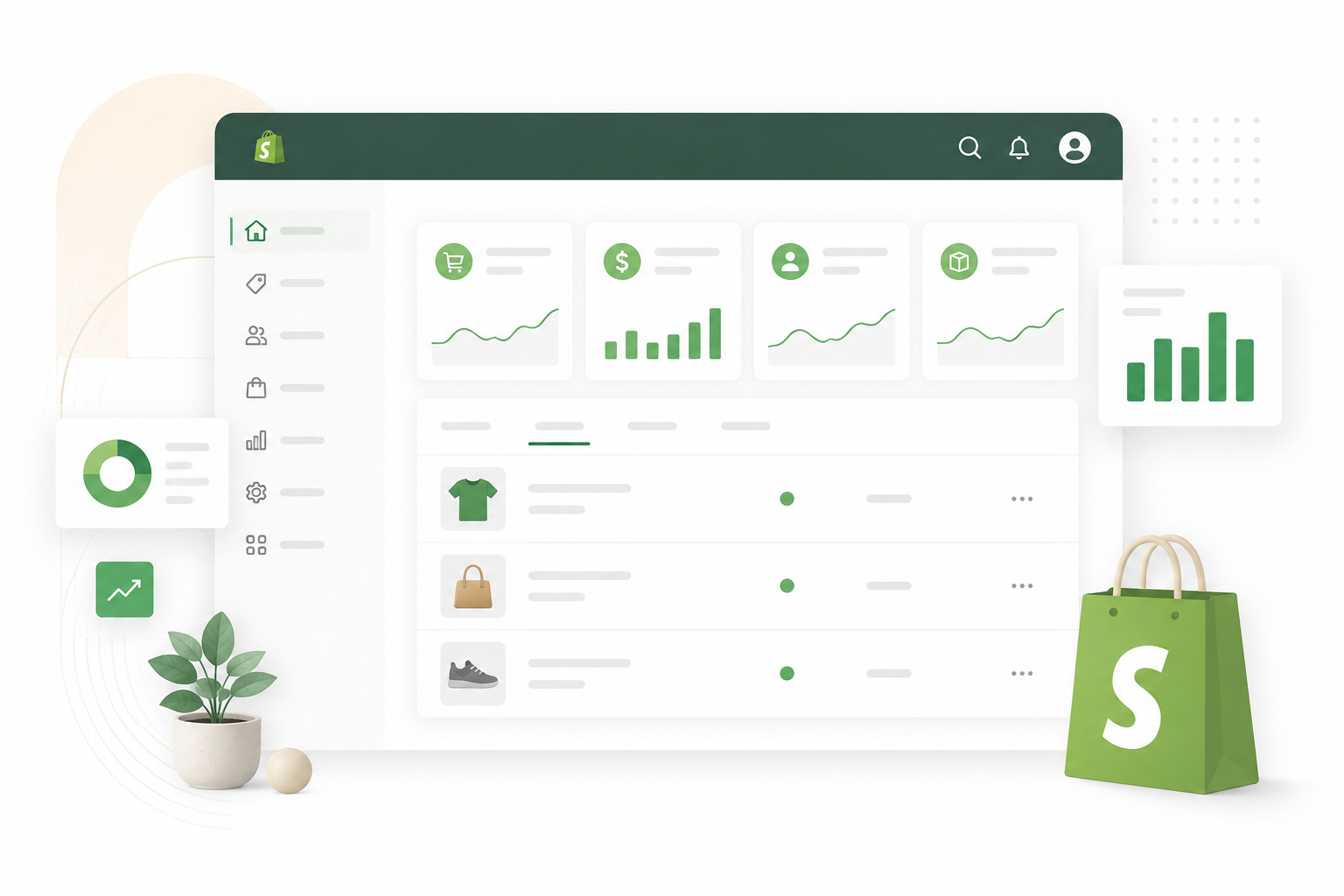
Shopify provides comprehensive tools for managing products and inventory from a single dashboard. Merchants can create product catalogs with multiple variants, such as different sizes, colors, or materials. The platform also enables businesses to monitor inventory levels, update stock availability, and manage products across multiple warehouse or fulfillment locations.
2.3 Payment solutions with Shopify Payments
Shopify Payments is Shopify's integrated payment solution that allows businesses in supported countries to accept and manage payments directly within the platform without connecting to a third-party payment gateway. It supports multiple payment methods, making the checkout process more convenient and simplifying order management.
Shopify Payments is not currently available in Vietnam. As a result, businesses in Vietnam must integrate a third-party payment gateway supported by Shopify to process transactions on their online stores.
2.4 Marketing and SEO tools
Shopify includes a variety of built-in tools to help businesses improve their visibility in search engine results. Merchants can customize page titles, meta descriptions, URLs, and image alt text, as well as publish blog content to support their SEO strategy.
Beyond its core SEO features, Shopify offers a wide range of applications for email marketing, customer relationship management, and promotional campaigns. Built-in analytics tools allow businesses to monitor store performance and customer behavior, while automation features help streamline workflows and enhance the overall customer experience.
2.5 Omnichannel selling
Shopify enables businesses to sell across multiple channels, including their own online store, social media platforms such as Facebook, Instagram, and TikTok, as well as physical retail locations through Shopify POS.
The platform synchronizes products, orders, and inventory across all sales channels, allowing businesses to manage their operations from a single dashboard while delivering a consistent shopping experience.
2.6 Agentic Storefronts and AI-powered commerce
Agentic Storefronts is a feature introduced by Shopify in March 2026 that enables eligible merchants to make their products available on AI-powered shopping platforms such as ChatGPT, Microsoft Copilot, Google AI Mode, and Gemini.
Merchants can manage AI sales channels, monitor sales performance, and access related analytics directly from the Shopify admin dashboard.
3. What does Shopify cost?
When choosing a Shopify plan, businesses should consider not only the subscription price but also the included features and any additional operating costs that may arise as their store grows.
3.1 Shopify pricing plans
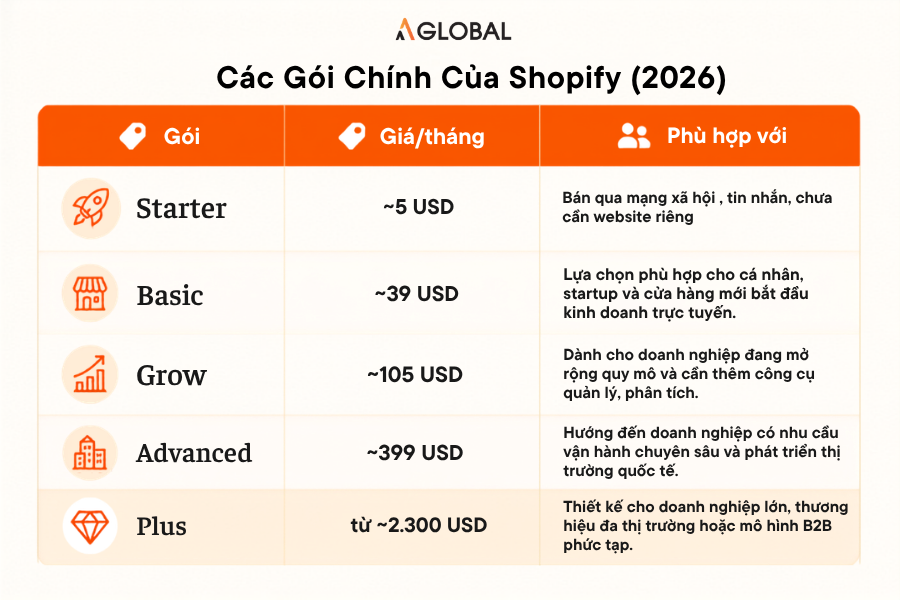
Shopify offers three primary subscription plans: Basic, Grow, and Advanced. These plans are designed to meet the needs of individual entrepreneurs, small businesses, and larger enterprises. The latest Shopify pricing allows businesses to choose a plan based on their operational requirements, budget, and desired features.
3.2 Free trial and promotional offers
Shopify offers a three-day free trial without requiring a credit card. After the trial period, eligible users can subscribe to the Basic, Grow, or Advanced plan for USD 1 per month during the first three months.
Businesses can also save up to 25% by choosing annual billing instead of paying monthly.
3.3 Additional costs
In addition to the monthly subscription fee, businesses may incur extra costs for purchasing a custom domain name, premium themes, or paid apps from the Shopify App Store.
As a result, the total cost of running a Shopify store depends on each business's specific requirements and the features they choose to implement.
4. What are the advantages and limitations of Shopify?
Shopify offers a wide range of powerful features, but businesses should also consider its strengths and limitations before deciding whether it is the right ecommerce platform for their needs.
4.1 Advantages
Shopify is widely adopted because it allows businesses to launch and manage online stores quickly while providing a comprehensive ecosystem of tools and services. Its key advantages include:
- Easy to use: An intuitive interface makes Shopify accessible even to users with little or no programming experience.
- Fast deployment: Built-in hosting, SSL certificates, and store management tools enable businesses to launch their websites quickly.
- Extensive app ecosystem: The Shopify App Store offers thousands of apps for marketing, payments, shipping, customer service, and store management.
- Highly scalable: Shopify supports businesses at every stage of growth, from individual entrepreneurs and startups to large enterprises, without requiring them to migrate to another platform.
4.2 Limitations
Despite its many advantages, Shopify also has several limitations that businesses should consider:
- Operating costs can increase over time: In addition to subscription fees, businesses may need to pay for premium themes, third-party apps, and additional services.
- Some advanced features are only available on higher-tier plans: Enterprise-level tools and advanced customization options may require upgrading to a more expensive subscription.
- Shopify Payments is unavailable in Vietnam: Businesses operating in Vietnam must use a third-party payment provider supported by Shopify to process customer payments.
5. How can Shopify be used together with Amazon?
In addition to building an independent online store, Shopify can be integrated with sales channels such as Amazon to help businesses reach more customers and diversify their sales strategy.
5.1 Building an independent sales channel with Shopify
Shopify enables businesses to create a standalone ecommerce website where they can manage products, orders, and the entire customer shopping experience.
Unlike Amazon, Shopify gives merchants full control over their website design, branding, and customer data. This allows businesses to build a stronger brand identity, create personalized shopping experiences, and develop long-term relationships with their customers.
5.2 Shopify vs. other ecommerce platforms
Amazon operates as an online marketplace, allowing businesses to sell products to its existing customer base. Shopify, on the other hand, provides businesses with their own dedicated ecommerce website, giving them greater control over branding, marketing, and customer engagement.
Rather than choosing one over the other, many businesses use both platforms simultaneously. Amazon helps generate sales by exposing products to millions of active shoppers, while Shopify allows businesses to build their own brand, own their customer relationships, and reduce their reliance on third-party marketplaces.
Combining Shopify with Amazon enables businesses to expand their sales channels, strengthen brand recognition, and reach customers through both marketplace and direct-to-consumer (DTC) sales.
5.3 When Shopify may not be the best choice
Although Shopify is suitable for many types of online businesses, it may not be the ideal solution for every situation.
Before choosing Shopify, businesses should carefully evaluate factors such as operating costs, customization requirements, integration with existing business systems, and target markets. Assessing these factors in advance helps ensure that the selected ecommerce platform aligns with both current operational needs and long-term business goals.
6. Conclusion
Shopify is a comprehensive ecommerce platform that supports businesses of all sizes with its ease of use, centralized management, and scalable infrastructure. Whether you are launching your first online store or expanding an established brand, Shopify provides the tools needed to build, manage, and grow your ecommerce business efficiently.
We hope this guide has given you a clearer understanding of what Shopify is and helped you determine whether it is the right platform for your business.
Partner with us to grow your Amazon business effectively.
Connect here to receive your free 1-on-1 consultation with AGlobal’s top experts.