What is ACOS? How to Calculate and Optimize it in Advertising
What is ACOS? This is an important metric that helps businesses evaluate the effectiveness of advertising on Amazon. Understanding what ACOS is, how to calculate it, and how to optimize it will help businesses control advertising costs and improve revenue when selling on Amazon.
1. Overview: What is ACOS?
ACOS is a key metric used to measure advertising performance on Amazon. Understanding what ACOS is will help you optimize costs and improve sales performance.
1.1. Definition of ACOS
ACOS stands for Advertising Cost of Sales, which refers to the ratio of advertising spend to advertising revenue. It is an important metric used to measure the effectiveness of advertising campaigns on Amazon, especially PPC ads.
See more: What is Amazon PPC? Key things to consider when running PPC ads on Amazon.
Simply put, ACOS shows how much a business spends on advertising to generate revenue from those ads. This metric helps sellers evaluate campaign performance and control marketing costs during the selling process.
1.2. ACOS Formula
Besides understanding what ACOS is, you also need to know how to calculate it. Using the correct formula helps businesses evaluate advertising performance and manage costs more effectively.
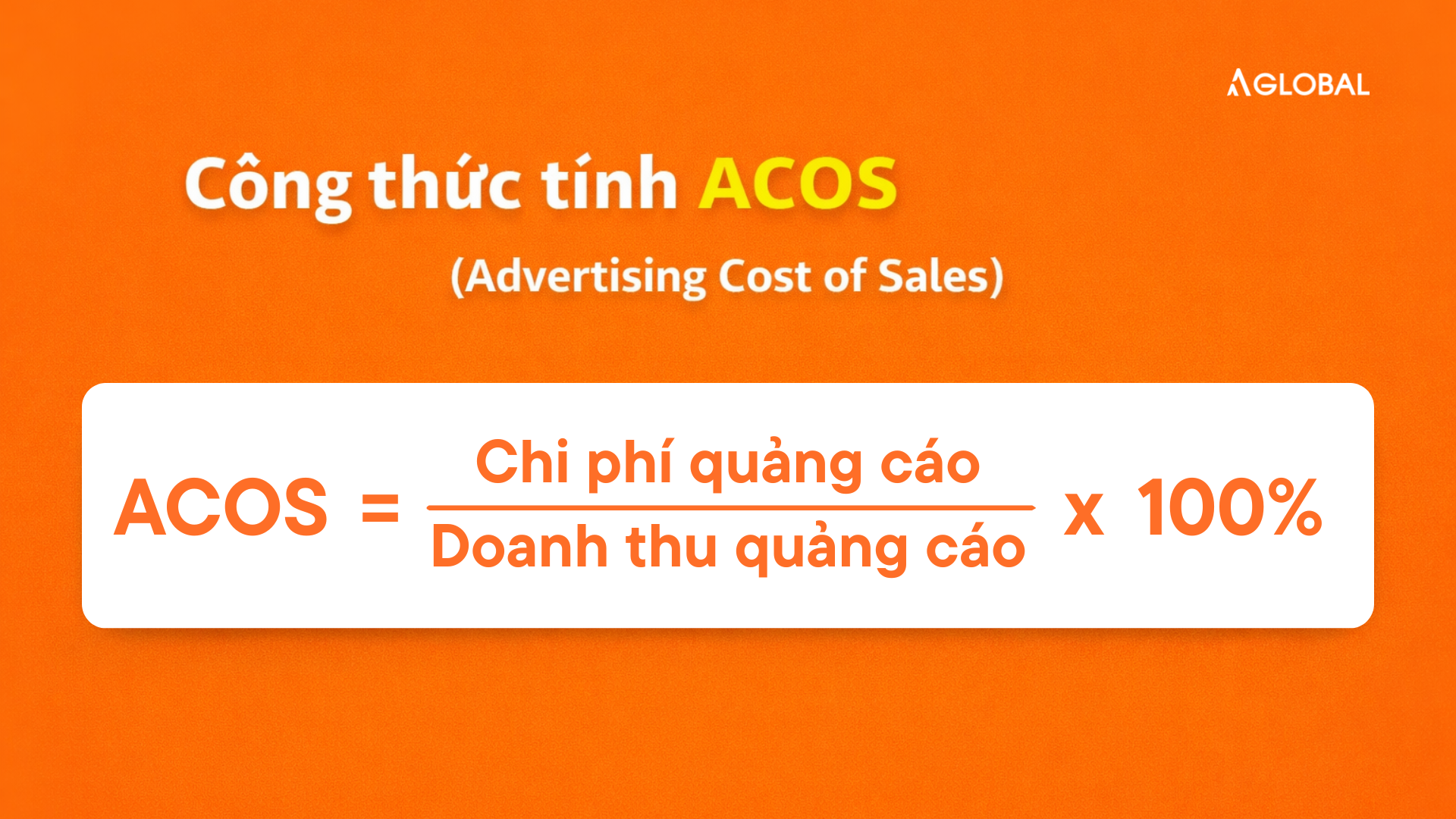
Example: If a business spends $180 on Amazon ads in one week and generates $720 in ad revenue during that same period:
ACOS = (180 / 720) × 100 = 25%
This means the business spent 25% of its revenue on advertising costs.
ACOS provides an overall view of advertising performance, helping businesses adjust campaigns accordingly and estimate budget allocation. This allows businesses to balance advertising costs, generated revenue, and customer return potential.
2. Is a High or Low ACOS Better in Amazon Advertising?
A common question when learning what ACOS is: “Is a high or low ACOS better?” In reality, the ideal ACOS depends on business goals and product profit margins.
2.1. Low ACOS
A low ACOS indicates that a business is spending less on ads to generate revenue. This is usually a sign of an effective campaign. However, an ACOS that is too low may also suggest that the business is not fully leveraging its advertising potential to scale sales.
When ACOS is low, profit per order is typically higher because advertising costs take up a smaller portion of total revenue. This helps businesses maintain profitability and control their marketing budget.
2.2. High ACOS
A high ACOS means that advertising costs account for a large portion of ad revenue. In many cases, this can reduce profits or even lead to losses.
High ACOS often occurs when:
-
Keywords are highly competitive
-
Bids are too high
-
Product pages have low conversion rates
In these cases, businesses need to re-evaluate their campaigns by adjusting keywords, bids, or product page content.
2.3. What is a Good ACOS?
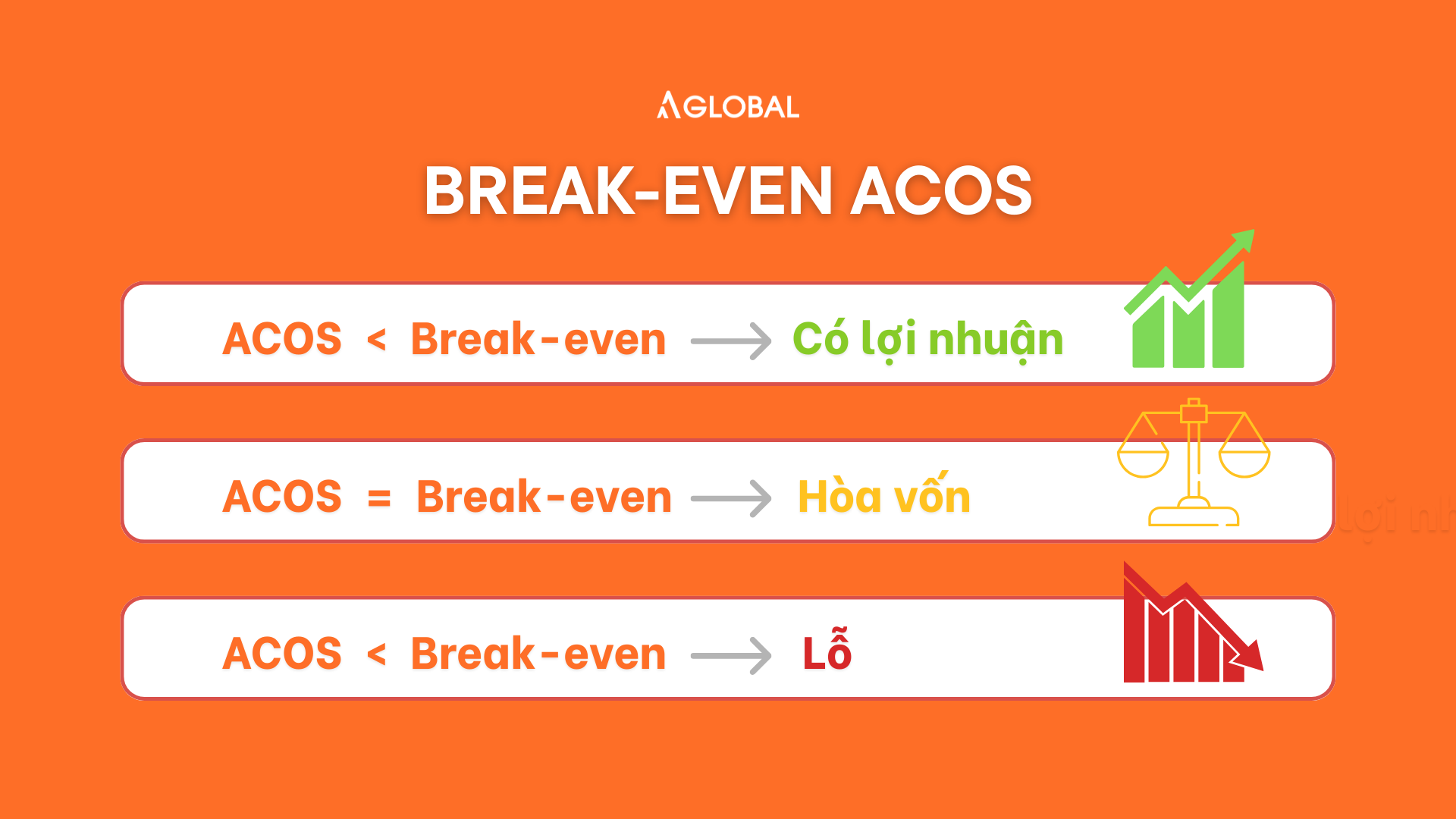
The ideal ACOS depends on product profit margins. In practice, many sellers compare ACOS with Break-even ACOS to determine performance.
Break-even ACOS is the maximum ACOS a business can afford without making a loss.
2.4. When Can Businesses Accept a High ACOS?
In some cases, businesses may accept a high ACOS, especially when the goal is not immediate profit.
Common scenarios include:
-
Launching a new product on Amazon
-
Increasing visibility and brand awareness
-
Improving product search ranking
-
Collecting keyword and customer behavior data
In early stages, accepting a high ACOS can help products reach more customers and build a foundation for stable future revenue.
3. Factors Affecting ACOS in Amazon Advertising
ACOS is not only influenced by advertising budget but also by multiple factors throughout the selling process.
3.1. Product Page Conversion Rate
The conversion rate indicates how many users make a purchase after clicking an ad. A higher conversion rate means more orders per click, which helps reduce ACOS.
Conversely, if users click but do not purchase, ad costs increase while revenue remains unchanged, leading to a higher ACOS.
3.2. Keyword Competition
Highly competitive keywords often have higher bids. When many sellers compete for the same keyword, the cost per click increases.
This drives up advertising costs and may increase ACOS if revenue does not grow accordingly.
3.3. Advertising Bids
Bids directly impact advertising costs. If bids are too high, businesses pay more per click, which increases ACOS.
Proper bid adjustments help control budget and improve campaign performance.
3.4. Product Page Content Quality
Product page content includes images, titles, descriptions, and customer reviews. A well-optimized page helps customers better understand the product and make purchasing decisions.
This improves conversion rates, reduces cost per order, and optimizes ACOS.
4. Common Mistakes When Optimizing ACOS
Although ACOS is a critical metric, there are common mistakes businesses often make when evaluating and optimizing it.
4.1. Assuming Lower ACOS is Always Better
A common misconception is that the lower the ACOS, the better the campaign. In reality, focusing too much on reducing ACOS may limit growth opportunities.
In some cases, increasing ad spend may raise ACOS but significantly boost revenue.
4.2. Evaluating Performance Based Only on ACOS
ACOS only reflects the relationship between ad spend and ad revenue. However, overall business performance depends on other factors such as product margins, operational costs, and pricing.
Therefore, businesses should combine ACOS with other metrics for a more comprehensive evaluation.
4.3. Not Defining Break-even ACOS Before Running Ads
Without defining Break-even ACOS, businesses cannot determine whether campaigns are profitable.
Calculating this threshold helps sellers set clear goals when running Amazon ads.
4.4. Optimizing Too Early Without Enough Data
Another mistake is optimizing campaigns too early. When ads haven’t run long enough, the data may be insufficient and inaccurate.
Making adjustments too soon can reduce performance and cause businesses to miss potential keywords.
5. How to Optimize ACOS in Amazon Advertising
To control advertising costs and improve sales performance, businesses need to apply appropriate ACOS optimization strategies.
5.1. Track ACOS by Campaign
Instead of only monitoring overall ACOS, businesses should analyze it by campaign, ad group, or keyword.
This helps identify which campaigns perform well and which need improvement.
5.2. Adjust Advertising Bids
Adjusting bids helps control costs and improve efficiency. If a keyword has a high ACOS, businesses can lower the bid or pause it.
Conversely, high-performing keywords can have increased bids to expand visibility.
5.3. Optimize Product Pages to Increase Conversion Rate
Product pages play a crucial role in purchasing decisions. Businesses should optimize:
-
High-quality images
-
Clear titles
-
Detailed descriptions
-
Positive customer reviews
Improving conversion rates reduces cost per order and helps optimize ACOS more effectively.
6. Conclusion
Understanding what ACOS is, how to calculate it, and applying effective optimization strategies in Amazon advertising will help businesses control costs, improve Amazon PPC performance, and achieve sustainable revenue growth.
AGlobal – The best cross-border e-commerce solution for businesses.
Register for a free 1-on-1 consultation tailored to your industry today Here!