Top 10 Key Export Items of Vietnam in 2026
This article summarizes Vietnam's current key export items such as electronics, textiles, agricultural products, seafood, and wood products. It explores growth potential, opportunities for expanding into international markets, and the role of Vietnamese exports in the global economy.
1. Vietnam's current key export items
Over the years, exports have consistently been a crucial driver of Vietnam's economic growth. Thanks to advantages in production, abundant labor resources, and strong international integration, Vietnamese exports have increasingly expanded their presence in the global market.
Besides making a significant contribution to trade turnover, Vietnam's key export items also help enhance the position of Vietnamese businesses in the international supply chain. Alongside traditional sectors such as textiles, agricultural products, and seafood, many high-tech fields are also becoming new drivers of economic growth.
2. Why are exports a crucial driver of Vietnam's economy?
Exports offer numerous strategic benefits to the economy and the business community:
-
Increase foreign exchange earnings
-
Promoting domestic production
-
Create jobs for workers.
-
Attracting foreign investment
-
Expanding international trade relations
-
Enhancing the competitiveness of Vietnamese businesses.
In the context of globalization and the booming e-commerce sector, exporting is not only a business activity but also an opportunity for Vietnamese businesses to build their brands in the international market.
Read more:Exporting goods: A breakthrough with global business opportunities.
2.1. Electronics and Components
Electronics and components are currently Vietnam's leading export sector. Key products include smartphones, computers, electronic components, and various technological devices serving the global market. Vietnam is also becoming an important link in the supply chains of many large corporations such as Samsung, Intel, and Apple.
The industry's advantages stem from its increasingly sophisticated production ecosystem, rising global demand for technology, and rapid production expansion capabilities. This continues to play a crucial role in the structure of Vietnam's current exports.
2.2. Textiles
Textiles and garments are one of Vietnam's traditional export industries, contributing significantly to its trade turnover. Popular products include fashion clothing, uniforms, fabrics, and garment accessories, primarily exported to the United States, Europe, Japan, and South Korea.
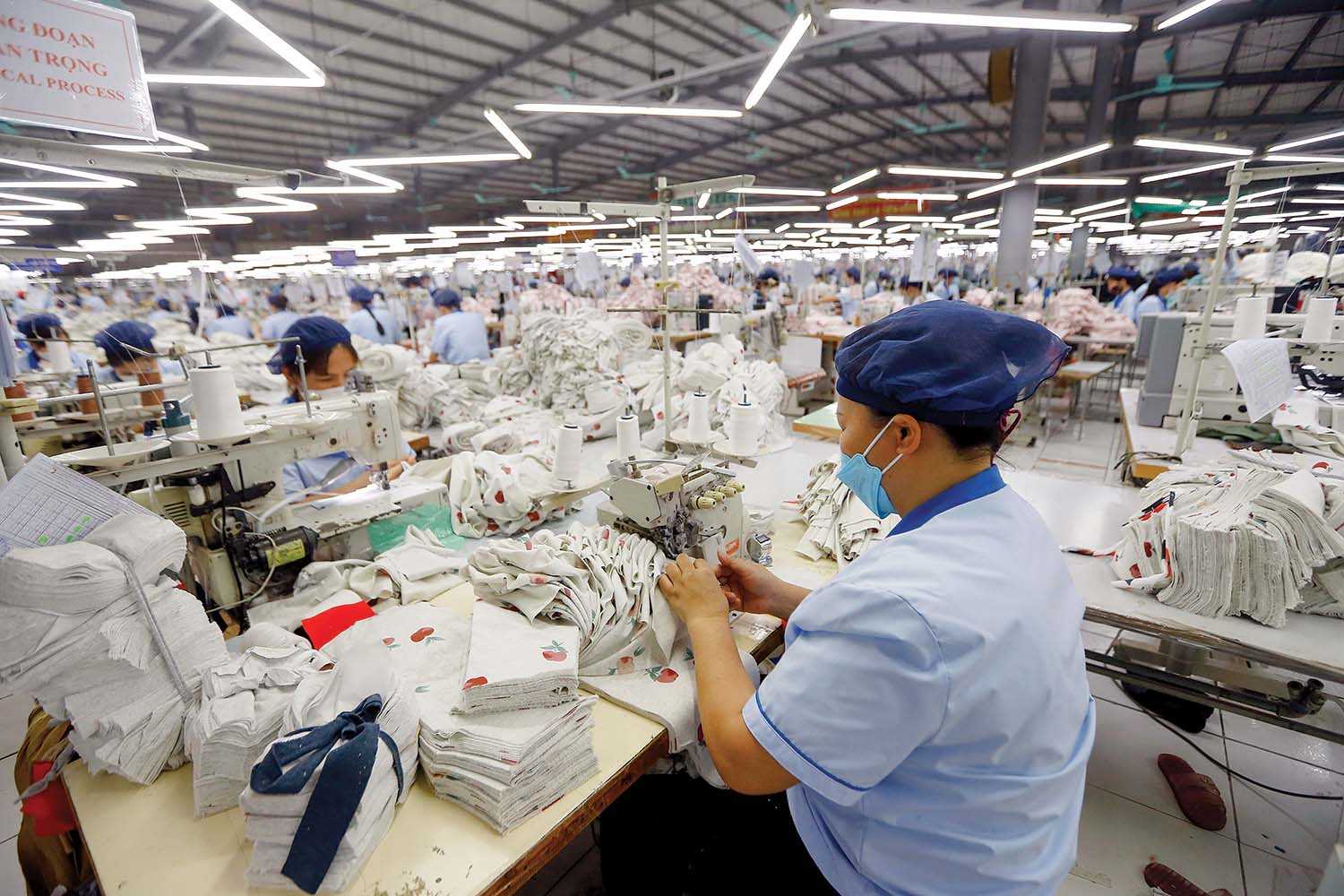
The industry benefits from its large production capacity, highly skilled workforce, and competitive costs compared to many countries in the region. Besides traditional export channels, cross-border e-commerce is also opening up more opportunities for Vietnamese businesses to reach international customers.
2.3. Footwear
Vietnam is currently one of the world's major footwear manufacturing centers, supplying many international brands such as Nike and Adidas. Key export products include athletic shoes, sandals, fashion shoes, and various other product lines serving the global consumer market.
Besides the advantages of low production costs and large-scale processing capacity, the Vietnamese footwear industry also benefits from the trend of shifting supply chains to Southeast Asia. This helps the industry maintain its growth potential in the coming years.
2.4. Agricultural Products
Agricultural products are a traditional export group that plays a crucial role in Vietnam's economic structure. Prominent items currently include rice, coffee, pepper, cashew nuts, and fruits and vegetables. Vietnam is also one of the world's leading exporters of coffee and cashew nuts.
The industry's advantages stem from abundant raw materials, favorable climatic conditions, and stable production capacity. In the context of the growing trend of green consumption and organic food, Vietnamese agricultural products have even more opportunities to expand into international markets.

2.5. Fisheries
Seafood is a major export sector that generates significant foreign exchange and has maintained stable growth over the years. Key products include shrimp, pangasius, tuna, and frozen seafood, which are exported to major markets such as the US, EU, Japan, and China.
Abundant raw materials and increasingly modern processing capabilities are helping Vietnamese businesses enhance their competitiveness in the global market. However, the industry must also strictly meet international standards regarding quality, food safety, and traceability.
2.6. Wood and wood products
Vietnam's wood and furniture industry is thriving thanks to rising global consumer demand. Popular export products include tables, chairs, cabinets, home furnishings, and decorative items in a wide variety of designs.
Vietnam is currently one of the world's largest exporters of wood products, thanks to its advantages in skilled craftsmanship and processing capabilities. Many businesses are also shifting from a processing model to building their own brands to increase export value.

2.7. Industrial machinery and equipment
Machinery and industrial equipment is a rapidly growing sector in Vietnam's export structure. The main products include mechanical equipment, manufacturing machines, and industrial components serving various fields.
The development of supporting industries, along with the global trend of manufacturing relocation, is helping Vietnamese businesses gradually improve their competitiveness. This is also a sector expected to continue strong growth in the coming period.

2.8. Rubber
Vietnam is one of the largest exporters of natural rubber in Asia. Vietnamese rubber is widely used in tire manufacturing, the automotive industry, and many other manufacturing sectors.
The main consumer markets currently include China, India, and South Korea. With the demand for raw materials for industrial production continuing to increase, the rubber industry is still considered to have stable growth potential in the future.
2.9. Plastic Products
The plastics export industry has significant growth potential thanks to strong global demand. Popular products include plastic packaging, household goods, and plastic components for industrial production.
Beyond serving consumer needs, the plastics industry plays a crucial role in industrial supply chains and export packaging. Many Vietnamese businesses are also investing in green manufacturing technologies and environmentally friendly materials to meet international standards.

2.10. Handicrafts
Handicrafts not only bring economic value but also contribute to promoting Vietnamese culture to the international market. Notable products include rattan and bamboo weaving, ceramics, lacquerware, and many other handcrafted items that reflect Vietnamese identity.
This sector has advantages in terms of uniqueness, handcrafted design, and product personalization capabilities. In particular, the development of international e-commerce platforms like Amazon and Etsy is opening up more opportunities for Vietnamese businesses to reach global customers.

Read more:Vietnamese products are popular on Amazon.
3. Challenges for Vietnamese exports
Despite achieving many successes, Vietnamese exports are still facing increasing competitive pressure from countries with strong manufacturing advantages such as China, India, and Thailand. This requires Vietnamese businesses to continuously improve product quality and optimize operating costs.
Furthermore, major markets such as the US, EU, and Japan are increasingly tightening standards regarding product quality, safety, and traceability. This presents both a challenge and a mandatory requirement if businesses want to expand their exports sustainably.
International logistics and shipping costs are also a major concern for many exporting businesses. Fluctuations in raw material prices, container costs, and the global economic situation can directly impact profitability and competitiveness.
Furthermore, many Vietnamese businesses still rely on outsourcing models, resulting in low brand value. Investing in brand building, technology, and independent production capabilities remains a crucial challenge in the future.
4. Future growth opportunities
In the coming period, Vietnam's exports are still considered to have significant growth potential thanks to the advantages from free trade agreements and the trend of shifting global supply chains. This presents an opportunity for Vietnamese businesses to expand their markets and participate more deeply in international value chains.
The strong growth of cross-border e-commerce is also creating more opportunities for small and medium-sized enterprises (SMEs) to reach international customers. Many product categories, such as handicrafts, agricultural products, and consumer goods, have good growth potential on global platforms.
Furthermore, the trend towards green consumption, sustainable products, and transparent origins is creating advantages for many Vietnamese industries. Businesses that invest in quality, technology, and international standards will have more opportunities to enhance their competitiveness.
In the future, building unique brands and developing high value-added products will be crucial directions for Vietnamese exports to achieve more sustainable growth in the global market.
5. Conclude
Vietnam's key export items are playing a crucial role in economic growth and international integration. From electronics and textiles to agricultural products, seafood, and wood products, Vietnamese goods are increasingly asserting their position in the global market.
In the context of increasing international competition, Vietnamese businesses need to focus on improving product quality, optimizing operations, and investing in branding to create a long-term competitive advantage. This will be a crucial foundation for the continued growth of Vietnamese exports in the coming years.
Register for a free one-on-one consultation tailored to your business's specific industry sector today!Here!