Product Packaging: Attracting Customers at First Glance
To make a product stand out on the shelves, product packaging is the decisive factor that helps a brand win over customers' hearts at first glance.. Understanding core values, investing in design, and choosing high-quality product packaging solutions are the golden keys to leading the market.
1. What is product packaging? Concept and role
Product packaging is the material used to contain, wrap, and protect goods during storage, transportation, display, and distribution. Today, packaging is also a tool that helps businesses build brand image and increase competitiveness.
In terms of its role, product packaging helps to minimize physical, chemical, and environmental impacts that could affect product quality. At the same time, packaging provides essential information such as ingredients, usage instructions, expiration date, and origin.
Beyond its protective function, packaging is also the first point of contact between a brand and its customers. Color, material, design, and messaging can create a strong impression, thereby influencing purchasing decisions.

Based on intended use and level of exposureWith goods, product packaging is oftendivided into three main levels: bPrimary packaging, secondary packaging, and tertiary packaging. This classification helps businesses choose the most suitable packaging solution.
Primary packagingIt is the layer that comes into direct contact with the product to protect its quality and ensure safety during use. Common examples include bottles, cans, tubes, zip bags, or food wrap.
Grade HA packagingiThis outer layer, the primary packaging, primarily serves the purpose of display, promotion, and sales support at the point of sale. This is the packaging layer that usually receives significant investment in visual design.
Tier 3 packagingPackaging materials such as cardboard boxes, pallets, or pallet wrap are used for the consolidation, storage, and transportation of large quantities of goods. This type of packaging helps reduce the risk of damage during the logistics process.
Each level of packaging serves a specific function in the supply chain. When properly designed, a packaging system not only protects the product but also contributes to optimizing logistics, enhancing customer experience, and increasing brand value.
2. Common types of product packaging today
Based on the level of exposure, packaging structures are divided into different levels of protection. The first is...level packaging systemA first layer is used for direct contact to preserve product quality. This is followed by second and third layers of packaging for display and transportation purposes.
Depending on the product characteristics, businesses will choose different manufacturing materials. Each type of material offers unique aesthetic and functional effects on the shelves. Below is a detailed comparison table of the most commonly used materials today:
|
Material |
Advantage |
Disadvantages |
Expense |
Sustainability |
|
Paper / Cardboard |
Lightweight, easy to print graphics on, and environmentally friendly. |
Easily permeable to water, with average mechanical strength. |
Low to Medium |
Very high (Easily recyclable) |
|
Plastic |
Durable, completely waterproof, and easy to shape. |
Difficult to decompose, potentially affecting green imagery. |
Short |
Low (Limited use) |
|
Glass |
Elegant, chemically safe, and provides excellent food preservation. |
Heavy, and easily cracked or broken upon strong impact. |
High |
High quality (Reusable multiple times) |
|
Metal |
Excellent load-bearing capacity, and provides complete protection against light and moisture. |
It is susceptible to oxidation if the surface is not properly treated. |
Medium to High |
High (Good for recycling) |
3. Criteria for selecting product packaging for businesses
The first and most important criterion when choosing a packaging system is its physical protection capability. The system must withstand negative impacts from the external environment. Humidity, sunlight, or mechanical impact can all degrade the quality of the goods.
The next criterion to consider is consistency with the brand identity system. The colors, fonts, and logo displayed must be consistent with the core positioning of the business. A well-designed layout will help customers recognize your brand instantly.
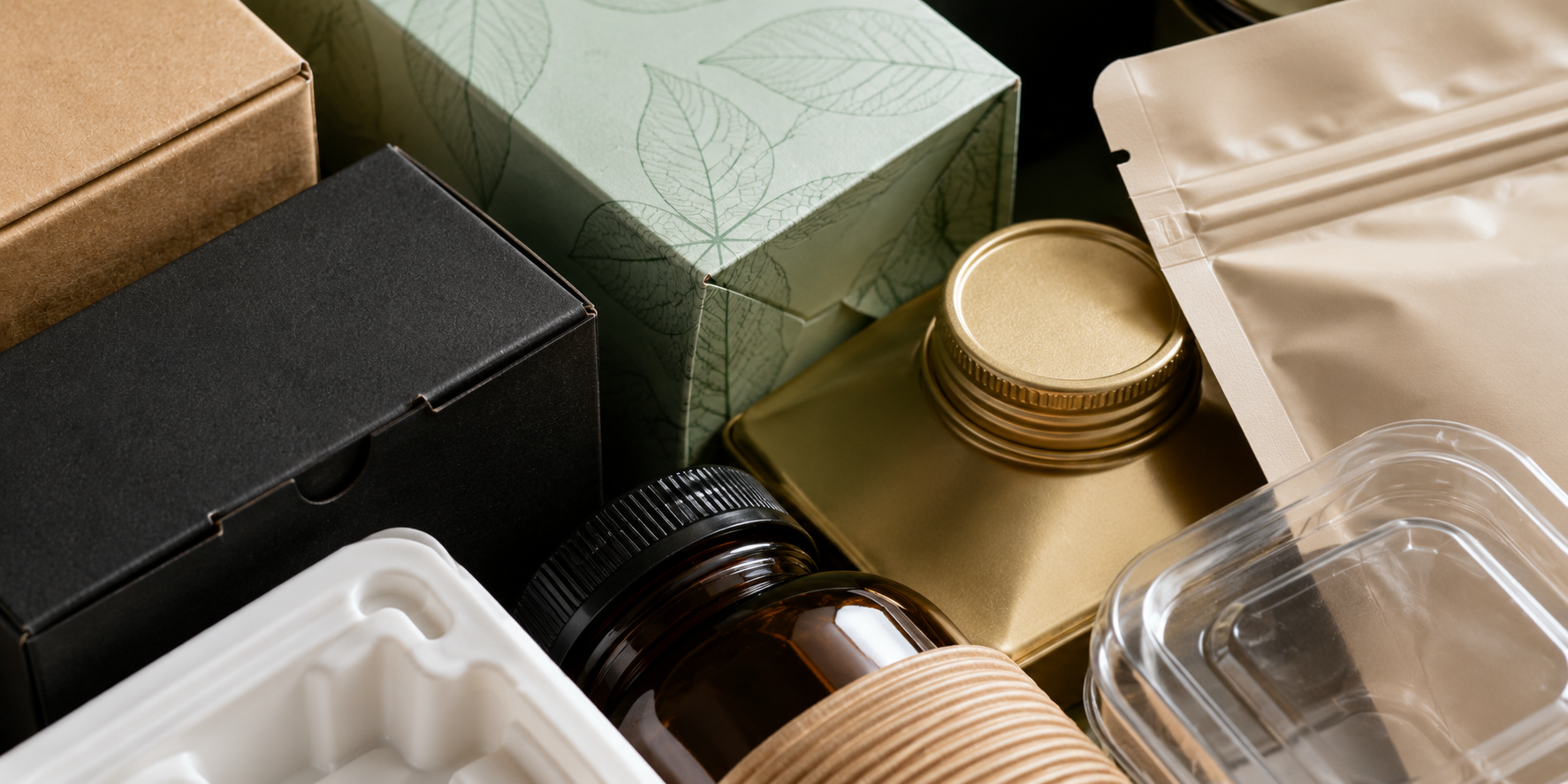
In addition, economic considerations are also a crucial factor that managers need to carefully consider. The cost of producing the packaging must be commensurate with the profit margin of that product line. Optimizing the size helps businesses significantly reduce logistics and warehousing costs.
Ultimately, the consumer experience should not be overlooked. Packaging design should prioritize convenience in opening, closing, and home storage. Small improvements like zip locks or smart screw caps always score big with customers.
4. Product packaging design and production process
The process of transforming initial ideas into finished products requires professionalism. The first stage is developing product packaging designs using graphic design software. Designers will work with the business to agree on the shape, colors, and information layout.
Technical drawings need to accurately calculate the volume and thickness of the actual materials. The current trend favors minimalist layouts that still highlight the brand logo. The goal of an excellent drawing is to achieve harmony between aesthetics and functionality.
After the design file is approved, the business will move on to the mass production of product packaging. This stage takes place in professional factories with modern printing machinery. Offset or Flexo printing techniques help to reproduce colors as accurately as possible compared to the computer-generated design.
Post-printing processes such as lamination and foil stamping create incredibly luxurious effects. Finely embossed details visually enhance the value of the product. Finally, die-cutting completes the structure, preparing it for the packaging line.
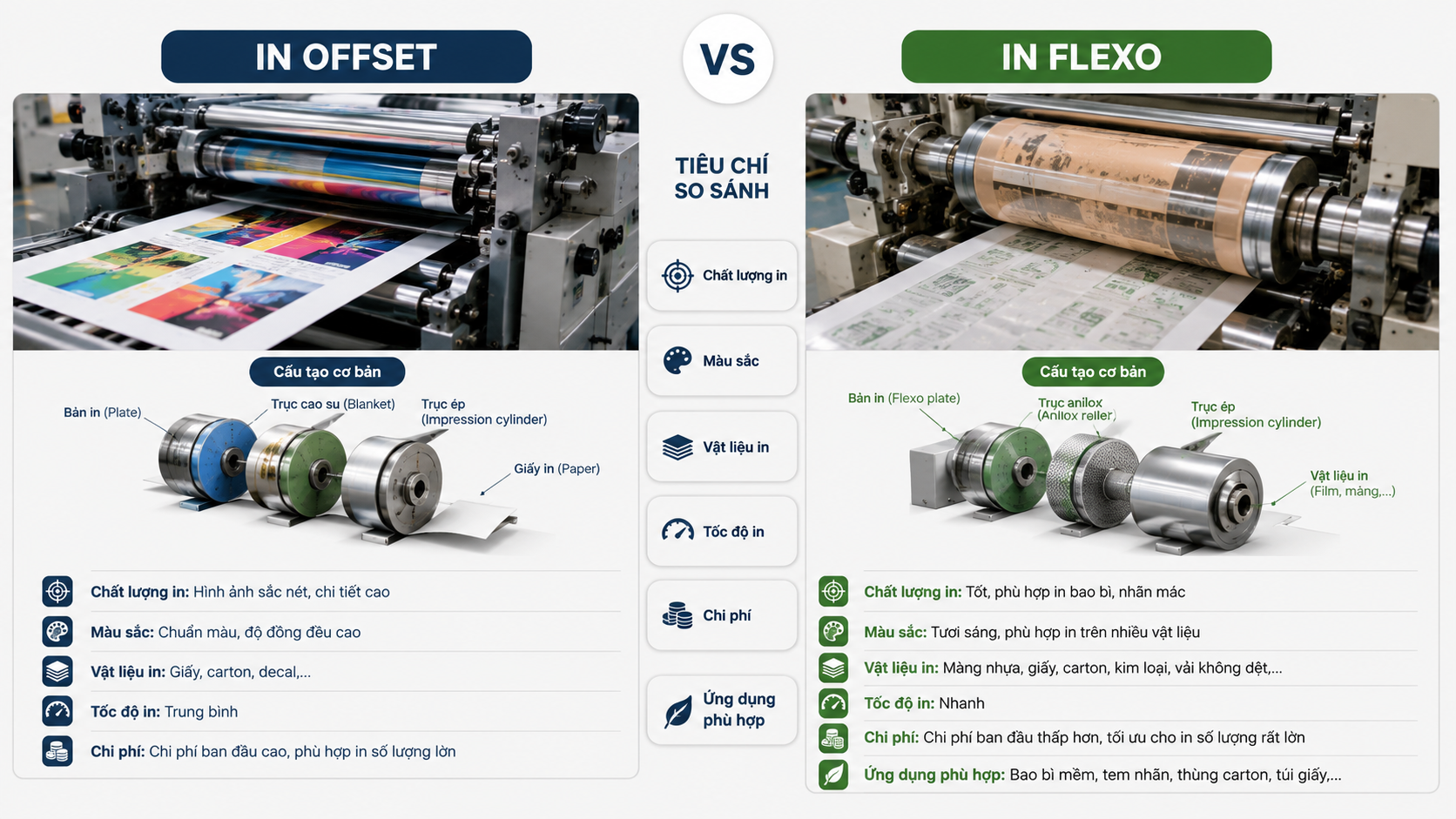
Comparing Offset and Flexo Printing Techniques
5. Product Packaging Trends 2026
The market in 2026 will witness a strong shift towards green bio-solutions. Consumers are becoming increasingly demanding and tend to boycott single-use plastic materials. Therefore, the application of biodegradable materials is becoming a new mandatory standard.
This year's design trend leans towards minimalism and sophistication. Natural, soft pastel tones combined with rustic materials are preferred. Eliminating unnecessary details helps convey the product's core message more easily.
The rise of smart technology has also breathed new life into the global packaging industry. The integration of interactive QR codes makes it easy for consumers to trace the origin of products. Some brands are even adopting AR technology to enhance their connection with customers.
Overall, investing systematically in product packaging is a long-term strategic move. A perfect packaging not only protects the goods but also serves as an excellent brand ambassador. Staying ahead of new trends helps businesses firmly establish their position in the market.
6. Conclusion
DInvesting in high-quality product packaging is a strategic move to elevate your brand and attract customers. If your business is looking for a comprehensive solution from concept to finished product,AGlobalWe also offer professional packaging design services, ready to partner with you to create something unique.
Register for a free one-on-one consultation tailored to your business's specific industry sector today!Here!