What Is Rebate? What E-commerce Sellers Need To Know
In today's highly competitive e-commerce landscape, optimizing products alone is not enough if sellers do not understand the financial mechanisms offered by platforms and partners. What is a rebate? It is a factor that can directly impact a seller's profitability. This article explains what rebates are, how they work, and how sellers can leverage them to improve business performance.
1. What is a rebate? A post-purchase incentive mechanism
A rebate is a refund or financial incentive returned to a buyer or seller after a transaction has been completed, provided certain conditions are met. These conditions may include reaching a sales target, fulfilling contractual requirements, or qualifying for a refund program.
When learning what a rebate is, it is important to understand its key difference from a direct discount: a rebate does not reduce the purchase price at the time of sale. Instead, it is paid out after the transaction has been completed.

More broadly, a rebate serves as a business incentive mechanism. It encourages sales growth and strengthens relationships between platforms, sellers, and partners through post-transaction financial benefits.
In e-commerce, rebates commonly take four forms:
- Sales rebate: Refunds or incentives granted when sellers achieve agreed sales targets with a platform or supplier.
- Advertising rebate: Advertising credits or fee reimbursements provided when sellers reach a predetermined advertising spend threshold.
- Service partner rebate: Fee refunds or incentives offered by logistics providers, software companies, or agencies based on KPI performance or service usage volume.
- Affiliate rebate: Commission sharing or fee reimbursements based on successful order referrals.
For example, a seller generating USD 500,000 in quarterly revenue may receive a 3% rebate under a specific agreement. This rebate is credited during a later payment cycle and directly affects net profit.
2. What should sellers know about rebates?
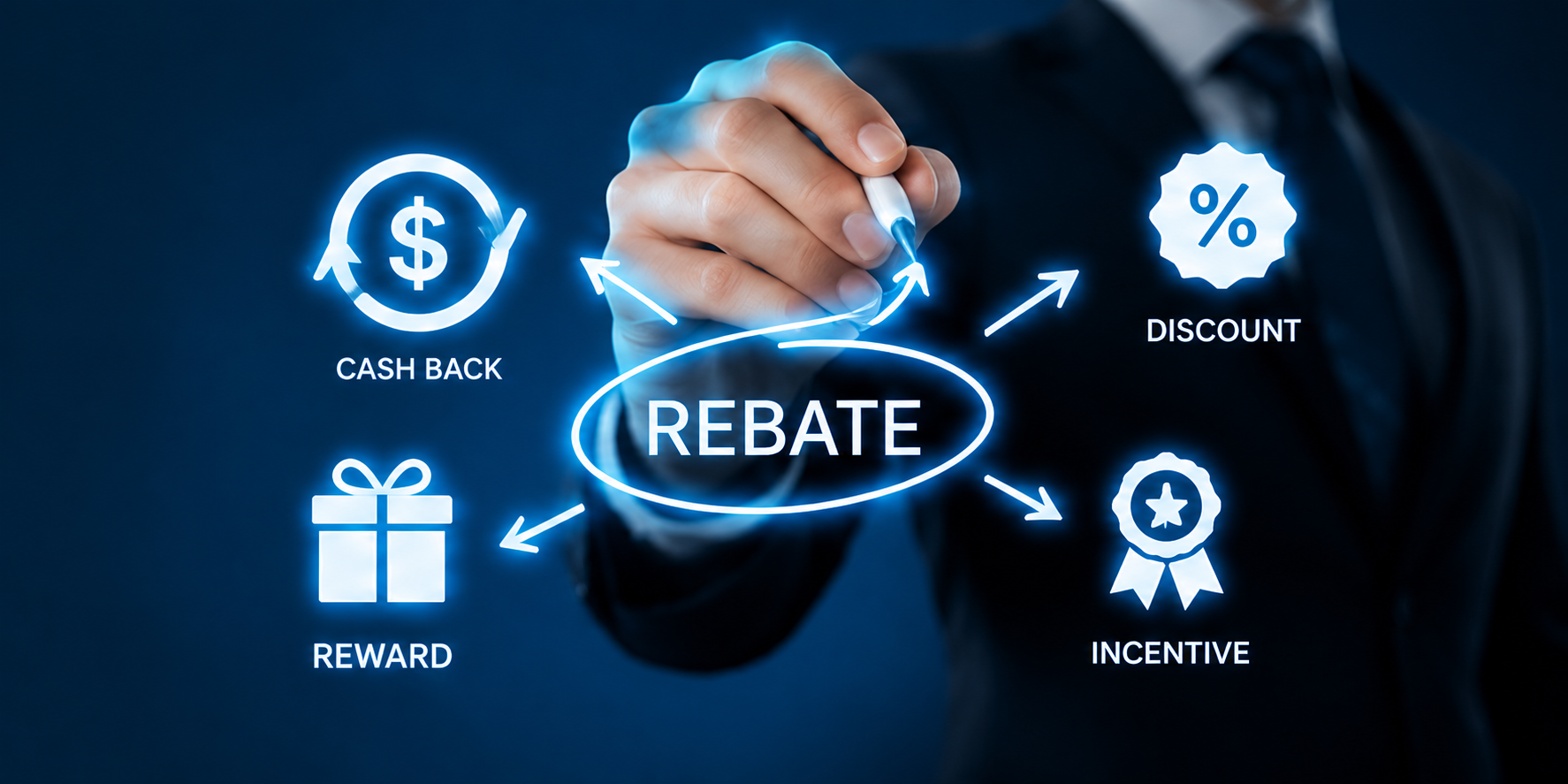
Rebates offer numerous benefits for business operations. However, to maximize their value, sellers need to understand how rebates work and the factors that should be considered when using them.
2.1. Optimizing operating and advertising costs
Rebates are not passive income. They require proactive cost planning. When sellers know they will receive a rebate after reaching a certain advertising spend threshold, they can factor that amount into their cost structure and budget planning.
In practice, many sellers calculate Advertising Cost of Sales (ACoS) using gross advertising expenses without accounting for rebates. Once rebates are incorporated into the calculation, actual ACoS may be 5-15% lower than initially reported.
2.2. Improving cash flow efficiency
One important aspect of understanding rebates is that, unlike revenue generated from individual orders, rebates are typically paid according to settlement cycles, often monthly or quarterly.
Advantages: Rebates improve actual profitability without affecting the listed selling price. Sellers can remain price-competitive while recovering a meaningful portion of their costs.
Challenges: There may be a liquidity gap of 30–90 days between spending and receiving rebate payments. Without proper planning, sellers may face cash flow pressure during peak sales periods such as Prime Day or Black Friday.
Recommendation: Maintain a monthly or quarterly rebate tracking system that is separate from operational cash flow. Rebates should only be treated as profit once the funds have been received.
Why Are Rebates Becoming a Popular Profit Optimization Strategy?
As business costs continue to rise, post-transaction rebates help companies reduce actual expenses and improve profit margins. Many sellers use rebates as a strategy to enhance profitability while maintaining competitive pricing in the market.
3. How rebates work on e-commerce platforms

Rebates are implemented in various forms throughout the e-commerce ecosystem, ranging from platform incentive programs to advertising and service partnerships.
3.1. Rebate programs on Amazon, Shopee, and Lazada
Amazon, Shopee, and Lazada offer rebates through mechanisms such as refunds, sales-based incentives, advertising support, and service fee reductions. To qualify, sellers typically need to meet specific requirements related to sales performance or operational metrics.
Sellers should carefully review the terms and conditions of rebate programs, as eligibility often depends on achieving sales targets, maintaining operational standards, or meeting spending requirements.
3.2. Advertising and operational cost rebates
Many platforms and advertising partners offer rebates by reimbursing part of a seller's expenses when predefined spending levels or campaign performance targets are achieved. These programs help businesses optimize marketing budgets and reduce operating costs.
3.3. Rebates from affiliate, logistics, and service partners
Rebates are also common in affiliate marketing programs, logistics services, and seller support solutions. Sellers may receive incentives or fee reimbursements for achieving transaction volume targets, referring new customers, or maintaining long-term service usage.
4. Rebate vs. Discount vs. Cashback: When should sellers use each?
This is one of the most common areas of confusion for new sellers. Although all three mechanisms help reduce costs or provide financial benefits, they differ significantly in terms of timing, beneficiaries, and impact on pricing strategy.
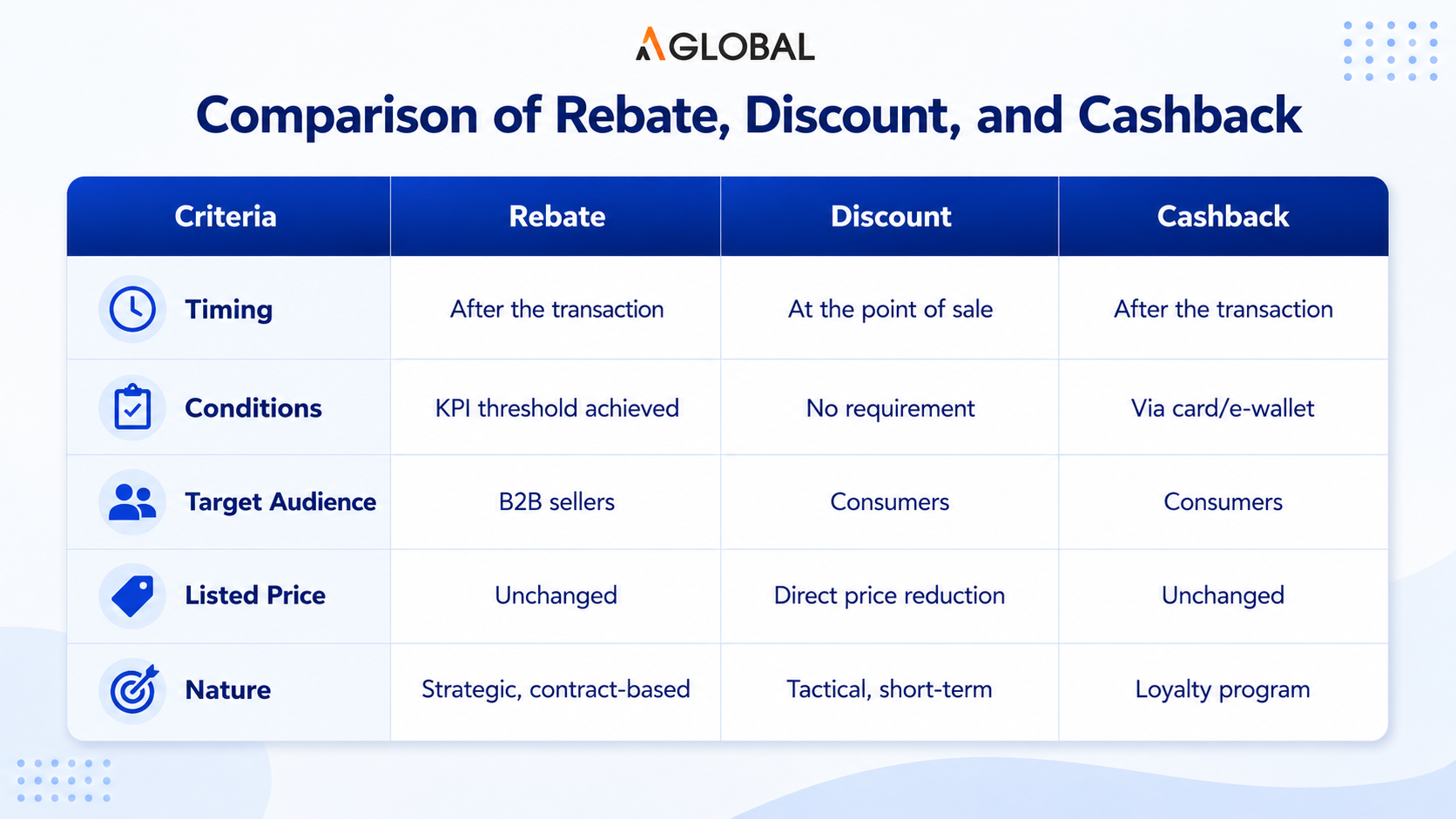
Three key differences sellers should remember:
First, rebates protect the listed price while discounts do not. For brands with Minimum Advertised Price (MAP) policies, excessive discounting can even result in the loss of distribution rights.
Second, rebates are primarily a B2B mechanism, while cashback is a B2C incentive. In other words, cashback is typically something sellers benefit from indirectly, whereas rebates are programs sellers actively negotiate or participate in.
Third, rebates require disciplined cash flow management. Discounts and cashback are reflected immediately in sales data, while rebates are generally paid 30–90 days later, depending on the settlement cycle.
5. Conclusion
A rebate is a post-transaction refund or incentive commonly used in e-commerce. Understanding what a rebate is and how it works can help sellers optimize costs, improve profitability, and enhance overall business performance.
Partner with us to grow your Amazon business effectively.
Connect here to receive your free 1-on-1 consultation with AGlobal’s top experts.