What is FOB? Its meaning and application in import and export.
FOB is one of the most common delivery terms in import and export. Understanding what FOB is, its costs, and the responsibilities of each party will help businesses negotiate effectively, control risks, and choose the appropriate delivery method in international trade.
1. What is FOB?
FOB is an abbreviation forFree On Board, a delivery condition included in the Incoterms rules issued by the International Chamber of Commerce (ICC).
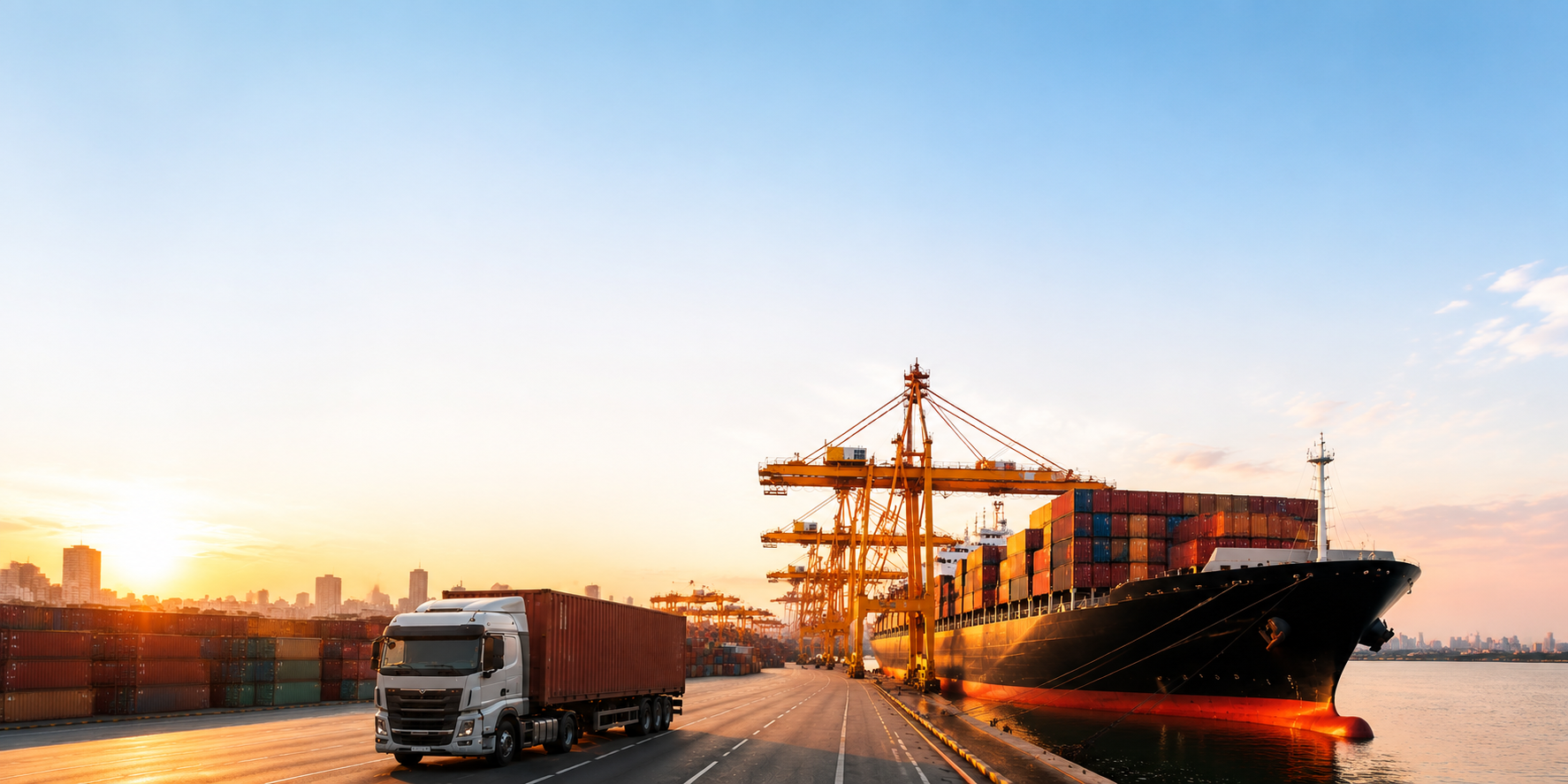
Under these terms, the seller is responsible for loading the goods onto the ship at the designated export port. Once the goods are successfully loaded onto the ship, the risk to the goods is transferred from the seller to the buyer.
FOB is primarily used for sea and inland waterway transport. It is also one of the most commonly used delivery terms in import and export activities.
To get a clearer pictureWhat is FOB?For example, consider a shipment of coffee exported from Cat Lai port to illustrate the actual responsibilities and costs.
Nif the contract statesFOB Cat Lai Port, VietnamThe seller will be responsible for loading the goods onto the ship at Cat Lai port. After that point, the buyer will be responsible for international shipping, insurance, and any related costs for the subsequent journey.
2. How do FOB terms and conditions work?
To effectively implement FOB (Free On Board), businesses need to clearly understand the responsibilities of each party and the timing of risk transfer. This is a crucial factor in minimizing disputes during transactions.
Seller's responsibilities
Under FOB terms, the seller is responsible for:
-
Prepare the goods according to the contract.
-
Packaging and labeling the product.
-
Complete the export customs procedures.
-
Transporting goods to the export port.
-
Pay all costs before the goods are loaded onto the ship.
-
Ensure delivery is made on time as promised.
Buyer's responsibilities
Once the goods are loaded onto the ship, the buyer will be responsible for:
-
Charter a vessel or book shipping.
-
Payment of international shipping fees.
-
Purchase cargo insurance (if needed).
-
Complete the import procedures.
-
Pay taxes and fees in the destination country.
Risk transfer point
This is the most important aspect of the FOB terms.
According to Incoterms, the risk to the goods is transferred from the seller to the buyer the moment the goods are loaded onto the ship at the export port.If any loss or damage occurs during international shipping after this time, the buyer will be responsible.
3. What is FOB price?
Besides the concept of FOB, many businesses are also interested in FOB pricing because it is an important basis in the quotation and export negotiation process. When surveying international markets, understanding FOB pricing is crucial.What is FOB?It helps compare prices between different suppliers based on the same delivery conditions.
FOB Price is the value of goods calculated at the time they are loaded onto the ship at the export port. This price includes all costs that the seller must pay to fulfill their delivery obligations under FOB terms.
Formula for calculating FOB price

Businesses can refer to the following formula:
FOB price = Product price + Domestic costs + Export costs + Shipping costs
In there:
-
Price of goods: The cost of producing or purchasing raw materials and finished products.
-
Domestic costs: Costs for transportation from warehouse to port, warehousing, and handling of goods.
-
Export costs: These include customs fees, packaging, labeling, and export documentation.
-
Shipping costs: Costs for loading and unloading goods at the export port.
Note: FOB price excludes international shipping and insurance.Therefore, this provides a useful basis for comparing export prices between suppliers in multiple countries, helping businesses assess their competitiveness.
4. Advantages and disadvantages of FOB in import and export.
FOB is a delivery term chosen by many businesses due to its relatively clear division of responsibilities between the buyer and the seller. However, like other Incoterms terms, FOB still has its own advantages and disadvantages that need to be considered.
4.1. Advantages of FOB
FOB (Free On Board) helps sellers reduce their liability after the goods are loaded onto the ship. Businesses do not need to manage international shipping or purchase cargo insurance.
For buyers, FOB offers flexibility in choosing the appropriate shipping line, logistics provider, and transportation method. Understanding this is key.What is FOB?This helps businesses choose the right port of delivery and avoid incurring unnecessary costs.
Furthermore, FOB is a common delivery term globally. This makes it easier for parties to agree on terms and execute transactions.
4.2. Disadvantages of FOB
The biggest drawback of FOB is that the buyer assumes the risk immediately after the goods are loaded onto the ship.
In the event of loss or damage during international shipping, the buyer will be primarily responsible.
Furthermore, FOB is only suitable for sea and inland waterway transport. For air or multimodal transport, other terms such as FCA are usually more appropriate.
5. Differentiate FOB from other Incoterms conditions.
FOB is often compared to CIF, EXW, and FCA. Before delving into CIF, EXW, or FCA, it's essential to understand them first.What is FOB?This will help you understand the basics of how responsibilities and risks are divided in import and export.
5.1. What is the difference between FOB and CIF?
Both FOB and CIF apply to sea transport. However, the seller's responsibility is significantly greater under CIF than under FOB.
Under FOB terms, the buyer is responsible for chartering the vessel and purchasing cargo insurance.
According to CIF (Cost, Insurance and Freight), the seller must pay international shipping costs and purchase insurance up to the destination port.
|
Criteria |
FOB |
CIF |
|
Chartering a ship |
Buyer |
Seller |
|
Insurance |
Buyer |
Seller |
|
Sea freight |
Buyer |
Seller |
|
Initial cost |
Lower |
Higher |
In general, FOB is suitable for businesses that want to proactively manage their transportation. Meanwhile, CIF is suitable for businesses that want to receive a complete transportation service from the seller.
5.2. What is the difference between FOB and EXW?
EXW (Ex Works) is the Incoterms term in which the seller has the lowest liability.
Under EXW, the seller only needs to prepare the goods at their warehouse or factory. From that point on, all costs and risks belong to the buyer.
Meanwhile, with FOB, the seller is still responsible for transporting the goods to the export port, completing customs procedures, and loading the goods onto the ship.
Therefore, the seller's responsibility is significantly greater under FOB than under EXW.
5.3. What is the difference between FOB and FCA?
FCA (Free Carrier) offers more flexible delivery terms than FOB.
According to the FCA, the seller delivers the goods to the carrier at the agreed-upon location. This condition may apply to various modes of transport.
Conversely, FOB only applies to sea and inland waterway transport.
This is why FCA is becoming increasingly popular in modern supply chains and multimodal transport operations.
5.4. Should you choose FOB or CIF in each case?
There is no single best option. The choice depends on the logistics experience and objectives of each business.
FOB is usually appropriate when:
-
The buyer has experience chartering ships.
-
We want to control shipping costs.
-
We have our own logistics partners.
CIF is usually appropriate when:
-
Buyers want to simplify the import process.
-
The seller has an advantage in international shipping.
-
We need a comprehensive delivery solution.
For businesses new to import and export, FOB is often a more manageable and transparent option.
6. Practical examples of FOB in import and export.
Practical examples will help businesses better understand what FOB terms mean in international transactions.
Suppose a Vietnamese company exports 20 tons of coffee to the US under the following conditions:
FOB Cat Lai Port, Ho Chi Minh City, Vietnam
In this case, the seller will be responsible for preparing the goods, transporting them to Cat Lai port, completing export procedures, and loading the goods onto the ship.
The buyer will be responsible for chartering the vessel, paying sea freight, purchasing insurance (if required), handling import procedures, and paying any related expenses in the United States.
As soon as the container of coffee is loaded onto the ship at Cat Lai port, the risk to the goods is transferred from the seller to the buyer.
7. Experiences in effectively applying FOB for businesses
Understanding what FOB is isn't enough. Businesses also need to grasp some practical experiences to minimize disputes and optimize costs during the transaction process.
7.1. Carefully review the contract terms.
The FOB terms must be clearly stated in the contract along with the version of Incoterms being applied.
For example:
FOB Hai Phong Port, Vietnam – Incoterms 2020
This helps the parties understand their responsibilities and avoids unnecessary disputes.
7.2. Clearly identify the FOB delivery port.
The name of the port of delivery must be stated fully and accurately in the contract.
For example:
-
FOB Cat Lai Port, Vietnam.
-
FOB Hai Phong Port, Vietnam.
Failing to specify the delivery address can lead to disputes regarding delivery costs and responsibilities.
7.3. Monitoring the risk transfer point
Sellers should keep complete documentation proving that the goods have been loaded onto the ship.
Some important documents include:
-
Bill of Lading (Sea Bill of Lading).
-
Goods delivery and receipt record.
-
Confirmation from the shipping company.
This is an important basis for resolving disputes should any incidents arise in the future.
7.4. Choosing the right shipping line and logistics provider
Although the buyer is usually the charterer under FOB terms, exporting businesses should still coordinate closely with shipping lines and logistics providers.
Timely information exchange will help minimize delays, reduce warehousing costs, and ensure timely delivery.
8. Conclusion
FOB is one of the most widely used delivery terms in international trade. Understanding what FOB is, what FOB pricing is, and when the risk transfers will help businesses be more proactive in their import and export activities.
MasterWhat is FOB?This helps businesses be more proactive in import and export, minimize risks, and optimize international transaction costs.
Register for a free one-on-one consultation tailored to your business's specific industry sector today!Here!